Contents
First thing to check: cross or isolatedThe short list of things that move itHow to find which cause it wasWhat to do about it nowCan I be closed at a different price than the one shown?First thing to check: cross or isolated
In isolated margin the money behind the trade is fenced off, so the liquidation price sits still. In cross margin your whole futures balance stands behind every open position at once, so the number shifts as your other trades move. If you are in cross margin, a liquidation price that keeps changing is the normal behaviour of the mode, not a glitch.
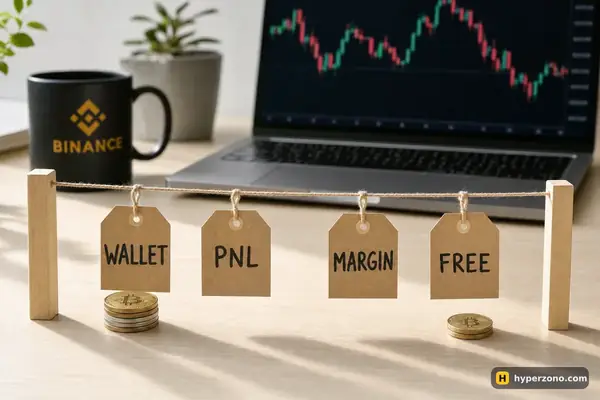
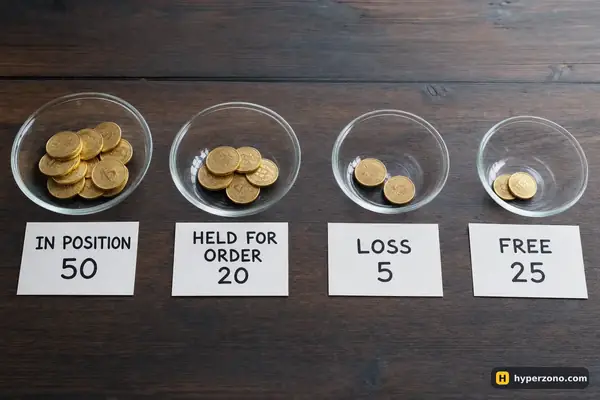
Say you have 300 USDT in your futures wallet, a bitcoin long and an ether short, both in cross. The ether short goes 25 USDT into unrealized loss. Your usable balance is now effectively 275 USDT, and the price at which the bitcoin long would be closed moves closer — even though you never touched that trade. When the ether short recovers, the bitcoin liquidation price moves back out again. If that linkage is new to you, cross margin vs isolated margin explains which mode to pick next time.
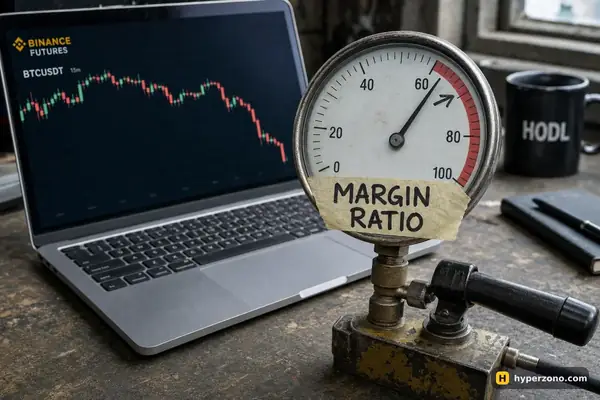
In cross margin what actually closes you is the whole account running out of spare money: the exchange compares the deposit it demands to keep your positions open with what is left in your balance, and when the demand eats the balance — shown in the app as a margin ratio of 100% — it starts closing. The liquidation price on the screen is just a snapshot of that moment, which is why Bybit's help page labels the cross-margin figure "for reference only".
One more price matters more than the one you watch on your chart. Liquidation is measured against the mark price — a fair average the exchange works out from several large spot markets, not the last trade on this venue. That is why a position can be closed at a level you never saw on your own chart, and the same mark price quietly feeds several of the causes below.
The short list of things that move it
Move money in or out of the trade and the number moves with it. Add 25 USDT to a position that had 100 USDT of margin and the liquidation price moves further away from the current price; take margin out and it comes closer. Top up an isolated trade and the exchange redraws the level straight away — you will see the new number in the position row within a second. The same thing happens if you make the position bigger or smaller, or if the exchange raises the safety deposit it wants behind your size.
Funding and fees are small enough to miss. On a 1,000 USDT position, one funding payment at 0.01% is 0.10 USDT, and a taker fee at 0.05% is 0.50 USDT on the way in. Every one of those leaves your balance, and in cross margin that balance is exactly what the number is built on. On an isolated trade Binance says the level stays put — its blog names only three things that shift it: adding or removing margin, changing the position size, and a change in the maintenance margin rate. If your isolated number moved anyway, open the transaction history and look for a margin top-up, a size change or a funding line, then compare the margin shown on the position before and after.
The third cause catches people out: you changed the trade yourself. Adding to the position, or closing part of it, changes the size the formula is built on, and in cross margin the profit or loss you realized on that partial close also changes your balance. Don't assume which way it went — read the new number in the position row after the fill.
The bigger your position gets, the bigger the safety deposit the exchange wants behind it. That deposit is called maintenance margin, and exchanges set it in size bands: the larger the band, the higher the percentage they hold back and the lower the leverage they allow. Move up a band in a fast market and the required deposit jumps, which pulls your liquidation price closer within a second. On Bybit that band is recalculated continuously from the live mark price and the total value of your positions and open orders, not only when you open or close something.
Sliding the leverage up or down on a position you already hold does less than you might expect. In cross mode, as long as you do not pull the free balance out of the account, changing leverage leaves the liquidation price where it is. What can happen instead is a refusal: the exchange recalculates the margin your position and open orders need, and if there is not enough free margin, the new leverage simply does not go through.
How to find which cause it was
Read the margin mode on the position row
Cross or isolated is usually printed right next to the leverage. Cross answers the question on its own in most cases.
Look at your other open positions
In cross, their unrealized profit and loss feed the same balance. One losing position pulls every other liquidation price closer.
Open the transaction history
Filter for funding, fees, realized profit and loss, and any margin transfer or withdrawal. Each line is money that entered or left the balance since you opened the trade.
Check order history for size changes
A partial fill you forgot, an extra entry, or a partial close all change the size the formula uses.
Recalculate and compare
Put the current size, margin and entry into a calculator and see whether the new number matches what the exchange shows. If it does, the mechanics explain it.
If the recalculated figure lines up with the screen, you have your answer and nothing unusual happened. The page on working out the liquidation price before you open covers how that calculation is built in the first place, and a rising margin ratio is the same story told as a percentage.
What to do about it now
You have four honest options, each with a cost. Adding margin pushes the liquidation price away but puts more of your money at risk in that one trade. Reducing the size realizes part of the loss now but cuts the damage if price keeps going. Closing a losing cross position frees up balance for the others. Switching your next trades to isolated caps what one mistake can take, at the price of a nearer liquidation level for the same size — the trade-off in add margin or cut the position is the same choice seen from the other side.
Liquidation watches the mark price, your stop may not. Liquidation is always measured on the mark price, while a stop-loss is often triggered by the last traded price by default. A stop set just above the liquidation level can be overtaken if the mark price gets there first. Set your stop well before the liquidation price, and consider switching the trigger to mark price so the two are measured the same way.
A good habit is keeping your margin ratio comfortably below 80%, so a normal swing never puts you near the edge. The cheapest way to see all of this behave is one small isolated position: if you want to watch the numbers on a live account, you can open a Binance Futures account and run a single trade with an amount you would not mind losing, checking the position row before and after each funding payment.
Can I be closed at a different price than the one shown?
Yes, and usually in a fast market. The mark price does not move in neat steps, so the level you were shown can be skipped. Binance gives this example on its own liquidation page: a bitcoin short calculated to liquidate at 17,006 — the mark price jumps from 17,000 to 17,100 within a second, and the position is closed at 17,100.
There is a cost on top of that as well. On Binance a clearance fee is taken after a liquidation, and it shows in your transaction history as "Liquidation Clearance". Plan with a buffer rather than down to the last dollar, and treat the liquidation price as a wall you never want to reach, not a level you can lean on.
Can the exchange move my liquidation price to liquidate me?
The price comes out of published formulas based on your position size, your margin, the safety deposit required for that size and, in cross mode, your whole balance. Both Binance and Bybit publish those rules, so you can recalculate the number yourself. What changes without you doing anything is the inputs: profit and loss on other cross positions, funding, fees and the size band your position falls into.
Why does my isolated position show a liquidation price that never moves?
That is the expected behaviour — the margin is fenced off for that one trade, so nothing happening in your other positions touches it. Binance's blog lists the exceptions: you add or remove margin, you change the size of the position, or the maintenance margin rate for your size changes. Bybit describes the isolated figure the same way, as staying fixed.
Does funding really change the liquidation price?
In cross margin, yes, through your money: each payment leaves or enters the balance the level is calculated from, and a week of them on a held position adds up to a visible shift. In isolated margin Binance says the level does not move on its own. If your isolated number did move, check the transaction history for a margin change, a size change or a funding line, and compare the margin shown on the position before and after.
Why did my liquidation price move after I closed half the trade?
The size in the formula changed, and in cross margin the profit or loss you realized on that close also changed your balance. Both inputs feed the number. Read the new figure in the position row instead of assuming it moved in your favour.
Is the displayed liquidation price in cross margin reliable?
Treat it as a worst-case snapshot — Bybit even labels it "for reference only". What really triggers the close is the whole account running out of spare money, shown as a margin ratio of 100%. And in a volatile market the actual closing price can differ from the one displayed, because the mark price can jump. Keep a buffer.
Sources and fact-check
Exchange terms were checked against official documents on November 4, 2026. Terms change — before you trade, check what matters to you in the exchange app and in your contract’s specs.
Binance: Three Misconceptions About Liquidations in Binance FuturesBinance: Futures Liquidation Protocols (FAQ)Bybit: FAQ — Order Execution and Liquidation