
Contents
Why most beginners lose money, and why that is not a conspiracyWhat your first three months are actually forWhat really changes your oddsWhy your account size sets the ceiling, however good you getA learning plan that actually fits a beginnerWhen to stop and change what you are doing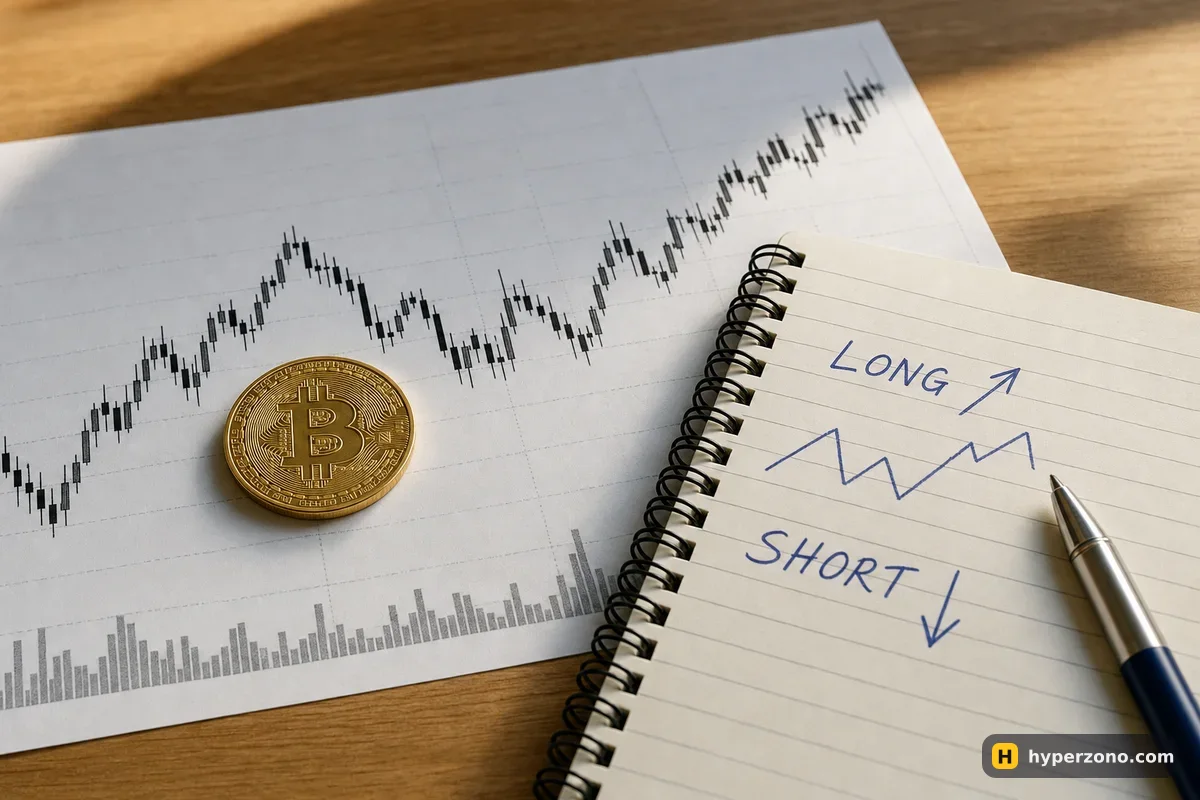
Why most beginners lose money, and why that is not a conspiracy
The exchange is not playing against you. The money usually goes to a trade that was too big, opened on a hunch, and left open while it got worse.
A futures trade moves fast, leverage multiplies both directions, and a beginner usually opens too big and then adds more when the price goes against them. Most beginners don't lose because they picked the wrong direction. They lose because the trade was too big and there was no exit set in advance. Both of those are things you control before you click, which is exactly why the honest answer isn't "don't bother".
What your first three months are actually for
Think of it the way you would think about learning to drive. Nobody expects to earn money from driving in week one; you expect to learn the controls, build habits, and not hit anything. Futures work the same way. In your first three months the goal is to open and close trades correctly, place a stop-loss every single time, survive a bad week without blowing up your balance, and find out how you behave when a trade is red.
If you finish that period roughly flat — down a little, up a little — you are doing better than most people who started with you. The money question comes later, and when it comes it is boring: small, repeatable gains on a small account. If you want to see that arithmetic in detail, it's laid out on how much you can make with a $100 account.
What really changes your odds
Four things separate the beginners who are still trading a year later from the ones who quit after three weeks. None of them are secret indicators or signal groups.
- Risk per trade. Decide before you click how many dollars you lose if you are wrong, and keep it tiny — a small fraction of your balance, not a third of it. A stop-loss is what makes that number real.
- One strategy at a time. Pick one setup on one or two liquid coins and trade only that for weeks. Jumping between methods means you never learn whether any of them works.
- A trade journal. Entry, exit, why you took it, what you felt. Three lines per trade. After thirty trades your own notes will tell you what keeps costing you money.
- Small size for longer than feels necessary. The urge to raise your size after three good trades is the single most expensive urge in trading.
Notice that none of these are about predicting the price. You will be wrong plenty of times and still come out fine, as long as being wrong is cheap. That is the whole craft.
Why your account size sets the ceiling, however good you get
Here is the part most videos skip. Skill decides your percentage; your balance decides your dollars. Say a month goes well and you finish 5% up — just a number to show the point. On a 100 USDT account that is 5 USDT; on a 5,000 USDT account the same 5% is 250 USDT. Same skill, same trades, completely different effect on your month.
Leverage does not fix this. It lets you open a bigger trade with the same money, so your profit and your loss both grow by exactly that much — and with big leverage, a small, ordinary price move is enough for the exchange to close your trade on its own so you don't lose more than your deposit. That's liquidation, and it tends to happen long before a small balance grows into anything. This is why the "quit your job in three months" math never works, and why making $100 a day is a question about your capital before it is a question about your skill.
Small account, big expectations — that's the trap. If you need the money you are trading with, the pressure will push you into oversized trades, and that is what empties accounts. Trade with an amount whose total loss would annoy you but change nothing else in your month.
A learning plan that actually fits a beginner
Weeks 1–2: understand the thing you are clicking
Learn what a contract is, what long and short mean, and what happens when the exchange closes a trade for you. Start with what crypto futures are in simple words — twenty minutes of reading saves a lot of money.
Weeks 2–4: get the clicks right before the money matters
If your exchange offers demo futures where you live, place maybe thirty trades there, with a stop-loss on every one. Demo is not available everywhere, and a specific coin may be missing from it, so if you can't use it, do the same thing live with the smallest position the exchange allows. You are learning the buttons and the order window here, nothing more.
Month 2: open the account and move a small amount
Open a Binance Futures account, check during sign-up that futures are offered where you live, and move a small amount to the futures wallet — something like 50–100 USDT is plenty to learn on.
Month 2: make your first real trade
One coin, isolated margin — that setting means a single trade can only cost you the money you put into it, not your whole balance. Then open one trade, the size you planned, not the size you hope for, and set the stop-loss before you look at anything else.
Month 3: review your journal honestly
Count how many trades you took without a stop, how many you sized up on impulse, and what your average loss is versus your average win. Fix the biggest leak and repeat the month.
When to stop and change what you are doing
Set the rule before you need it: if you are down a fixed amount — say a quarter of your starting balance — you stop trading for a week, read your journal and change one thing. If you catch yourself opening a new trade straight after a loss just to win the money back, turning the stop-loss off, or adding money to a trade that is already red, that is not a bad run, it is a broken process, and more trades will make it worse.
Quitting a losing approach is not failure; it is the only reason anyone survives long enough to get good. If after several honest months the whole thing still feels like pressing buttons and hoping, step back and decide calmly whether plain spot buying suits you better.
Can you make money trading crypto futures with no experience at all?
Over time, yes — but almost nobody does it in their first weeks. Without experience you don't yet know how big a trade to take or where to put your exit, and those two things decide your result far more than picking the right direction. Give yourself a few months of small, careful trades before you judge.
How much do beginner futures traders make?
Most make nothing in the first months, and a good number lose part of their deposit. Even once things start working, the result is a percentage of your balance, so a 100 USDT account produces single-digit dollar months, not life-changing sums. Anyone quoting you a fixed daily income is selling something.
How long does it take to become profitable?
There is no fixed answer, but think in months, not days. The people who get there usually trade one simple approach, keep each loss small and review their own notes — and they still have losing weeks after a year. Speed depends far more on discipline than on talent.
Is it smarter for a beginner to buy crypto on spot instead?
Often, yes, at least to start. Spot has no liquidation and no funding, so a bad week is just a lower number, not a closed position. The comparison is spelled out on the page about spot or futures for a beginner.
Should I start in demo or with real money?
Do both, in that order, if demo is available to you — exchanges don't offer it everywhere, and a specific coin may be missing from demo even when they do. Demo teaches you the order window and the mechanics for free, but it can't teach you how your hands shake when real money moves. After thirty clean practice trades, switch to a small real balance and keep the same rules.
Do signals or bots let a beginner skip the learning part?
They move the work, not the risk. You still choose the size, the leverage and when to turn it off, and those are exactly the decisions that empty beginner accounts. Learn the manual version first, then decide whether automation adds anything for you.