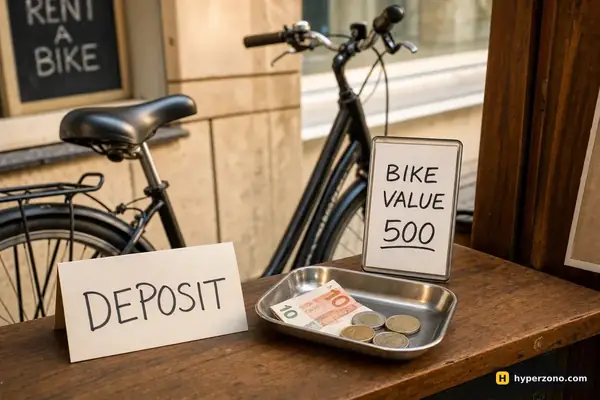
Contents
What you are actually buying in each caseWhat happens if price rises, falls, or goes nowhereA premium you pay once, and a margin that keeps movingWhy a textbook explanation may not match the contract on your exchangeHow to check all this before you risk moneyWhat you are actually buying in each case
With futures, every step the price takes counts in your money, up or down, for as long as the trade is open. Price goes your way, your balance grows; it goes against you, your balance shrinks — there is no fixed amount you paid in advance. On a crypto perpetual nothing is ever delivered, no coins change hands and the result is settled in USDT, but you carry the whole move either way. How that works day to day is covered in what crypto futures are, so here we only compare the money side.
An option is a different kind of deal. It is the right, not the obligation, to buy (a call) or sell (a put) at a fixed price — the strike — on or before a date the exchange sets. Using that right, actually buying at 60,000 when that is the strike, is called exercising the option. You pay for that right once, in cash, and that payment, the premium, is the whole of your commitment as a buyer. The person who sold you the option keeps the premium whether you ever use the right or not.
What happens if price rises, falls, or goes nowhere
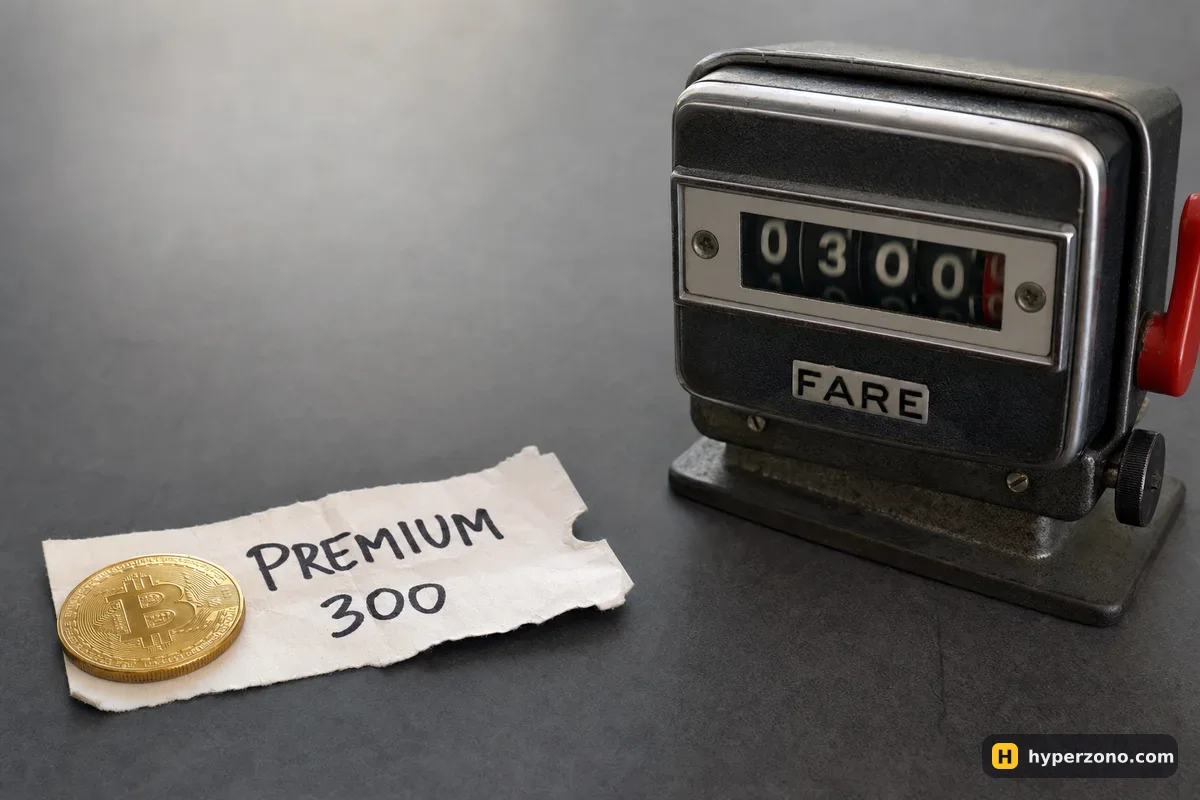
Here is the same idea in made-up numbers. Say bitcoin is around 60,000 and you want to be long for a month. Route one: you buy a call with a 60,000 strike on 0.1 BTC and pay 300 USDT for it. Route two: you open a long futures position of 0.1 BTC — that is 6,000 USDT of position value — at 10x, so the exchange holds 600 USDT of your money as margin.
| What price does | You bought the call (300 USDT premium) | You are long 0.1 BTC futures (600 USDT margin) |
|---|---|---|
| BTC rises to 66,000 | The right to buy at 60,000 is worth about 600 USDT; after the 300 you paid, you are about +300 | About +600 USDT, minus about 7 USDT in fees — the exchange charges a small percentage when you open the trade and again when you close it |
| BTC falls to 54,000 | The right to buy at 60,000 is worth nothing at expiry, so your 300 is gone — and nothing more | About −600 USDT, which is essentially the whole margin; the exchange would normally close the position before it got that far |
| BTC is still near 60,000 | The right to buy at 60,000 is worth nothing at expiry, so your 300 is gone | Roughly zero, minus fees and any funding you paid while holding |
The third row is the one beginners rarely expect. Part of an option's premium is simply payment for time — for the chance that price moves before the expiry date — and that part shrinks as the date gets closer, faster near the end. A quiet market is expensive for an option buyer. The futures position, meanwhile, just sits there costing you fees and funding.
A premium you pay once, and a margin that keeps moving
When you buy an option you pay the full premium up front and nothing is held back from you as a deposit. That payment is the most you can lose on the position, however far price moves against you, while what you might gain is not capped the same way. That is why the worst case is a single number you can write down before you click.
A futures position works the other way round. The exchange sets aside part of your money as a deposit for the trade — your margin — and works out how much by taking the size of your position and dividing it by your leverage. The position's value is measured against a fair price the exchange calculates itself (you will see it labelled mark price), and that price moves all the time, so the cushion you have left moves with it, including while you sleep.
If that cushion shrinks past the minimum the exchange requires, it closes the position for you — this is liquidation. Don't treat liquidation as your exit. It is what happens when you didn't set one.
You can still make a futures loss knowable in advance, you just have to do it yourself: pick the position size first, set a stop-loss at a level you chose, and use isolated margin so only the margin assigned to that trade is at risk — and check that automatic margin top-up is switched off, otherwise the trade can quietly pull more money from your balance. The easiest way to see those numbers together is to sign up on Bybit and look at the order window, where the cost of the order is shown as the margin plus the fee to open plus an estimated fee to close.
Selling an option is a completely different trade. Everything above about a known, limited loss applies to buying one. The seller's side is the mirror image: they receive the premium, have to post margin, and that premium is the most they can make — while the loss on the position is not capped the way the buyer's is. If a screen invites you to "earn the premium", that is the seller's side of the table, not the buyer's.
Why a textbook explanation may not match the contract on your exchange
If you have read about options before, that explanation probably came from a traditional exchange where every contract looks the same: fixed strike prices, one expiry calendar, and using your right hands you a futures contract instead of cash. Whether you may use it on any trading day or only on the expiry date is set by the rules of that particular exchange too. A crypto exchange writes its own rules, so none of that carries over automatically.
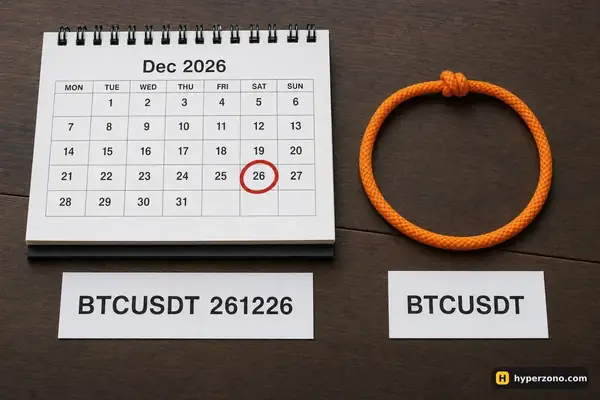
Settlement currency, expiry hour, when you may exercise, minimum size and even whether an options product exists for your account at all are decided contract by contract. Before you trade either type, open the specification of the exact contract and read it instead of assuming. On the futures side alone the difference is already visible: perpetual contracts exchange funding between longs and shorts, while contracts with an expiry date are settled on their settlement day — Bybit charges a 0.05% settlement fee when that happens — a difference explained in perpetual versus dated futures.
Access matters too. Bybit asks for identity verification before you can trade USDT perpetual and expiry contracts, with a higher level required for users in some regions, and people in service-restricted countries cannot trade derivatives there at all. Check what your own account can actually open during sign-up, and if you are still choosing a venue, start with which exchange suits a beginner.
How to check all this before you risk money
Look at what your own account can actually open
Open the derivatives list in the app and see what is really there for you — perpetual contracts, contracts with an expiry date, and whether an options product appears at all. On many accounts and in many countries it simply isn't, and that answers the question for you.
Open the specification of the one contract you care about
Look for the expiry date and time, how it settles, the minimum order size and the fees. For an option, also the list of strike prices and when you are allowed to exercise — that is, when you may actually use the right you bought. For futures, the leverage tiers and how much margin the exchange wants you to keep.
Write your worst case down as a number
For an option purchase it is the premium plus fees. For futures it is your stop distance multiplied by your quantity, or, in isolated margin, the margin you assigned to that position — but only if automatic margin top-up is off, because with it on the position can pull more from your free balance and your written-down number stops being true.
Test the mechanics without money
Place the same trade in demo first and watch how the margin figure moves while you hold it. If the contract you want is missing from demo, practise on one that is available — a demo account on Bybit takes a couple of minutes to open.
Is buying an option safer than trading futures?
The loss on a single option purchase is easier to know, because it is the premium you paid and nothing more. But losing 100% of a premium is common, and it can happen simply because price stood still until expiry. A futures trade with a small size and a stop-loss can put less money at risk than a large option premium does.
Can I lose more than the premium when I buy an option?
As a buyer, the premium you paid is the most you can lose on that position, however far price moves, and nothing extra is held as margin. Fees are on top of it. Even so, read the specification of the exact contract on your exchange rather than assuming it works the same way everywhere.
What is time decay in simple words?
Part of an option's premium is payment for time — for the chance that price moves before expiry. That part shrinks as the expiry date comes closer, and it shrinks faster near the end. When traders expect big swings, premiums go up; in a calm market they come down.
If I buy an option, do I have to hold it to expiry?
No. You can close it by selling the same option in the market while it still has value: a bought call is closed by selling that call, a bought put by selling that put. Once you have done that, you no longer hold the right to buy or sell at that fixed price.
I have 100 USDT — which should I try first?
Start with the product whose minimum size fits your money and whose worst case you can say out loud. For futures that means a small position with a stop-loss you set yourself; see how much you need to start. Whatever you pick, open the contract specification first and run the trade in demo once.
Sources and fact-check
Exchange terms were checked against official documents on October 21, 2026. Terms change — before you trade, check what matters to you in the exchange app and in your contract’s specs.
CME Group: Fundamentals of Options on FuturesBybit Help Center: FAQ — USDT Perpetual and Expiry Contracts