Contents
The short answer for Japan, as of 25 October 2026What the 2x cap means for your moneyBinance, Bybit, OKX, Hyperliquid and Binance Wallet: where residents standWhat happens to an account you already haveWhat you can do from Japan right nowThe short answer for Japan, as of 25 October 2026
Two questions get mixed together here, and it helps to keep them apart. The first is whether the law allows you to trade crypto derivatives in Japan: it does, but only through a company registered with the FSA, and only at up to 2x leverage if you are an individual. The second is whether a particular exchange accepts you at all — that is the exchange's own decision, written in its terms, and several large ones say no to Japanese residents.
So nobody is going to arrest you for being curious about futures. What you will run into is a much shorter list of venues than a reader in, say, Nigeria or Kazakhstan sees, and much lower leverage than the 20x or 50x you read about in generic guides. If a site promises you 100x on bitcoin as a Japanese resident, that promise does not fit the Japanese rules.
What the 2x cap means for your money
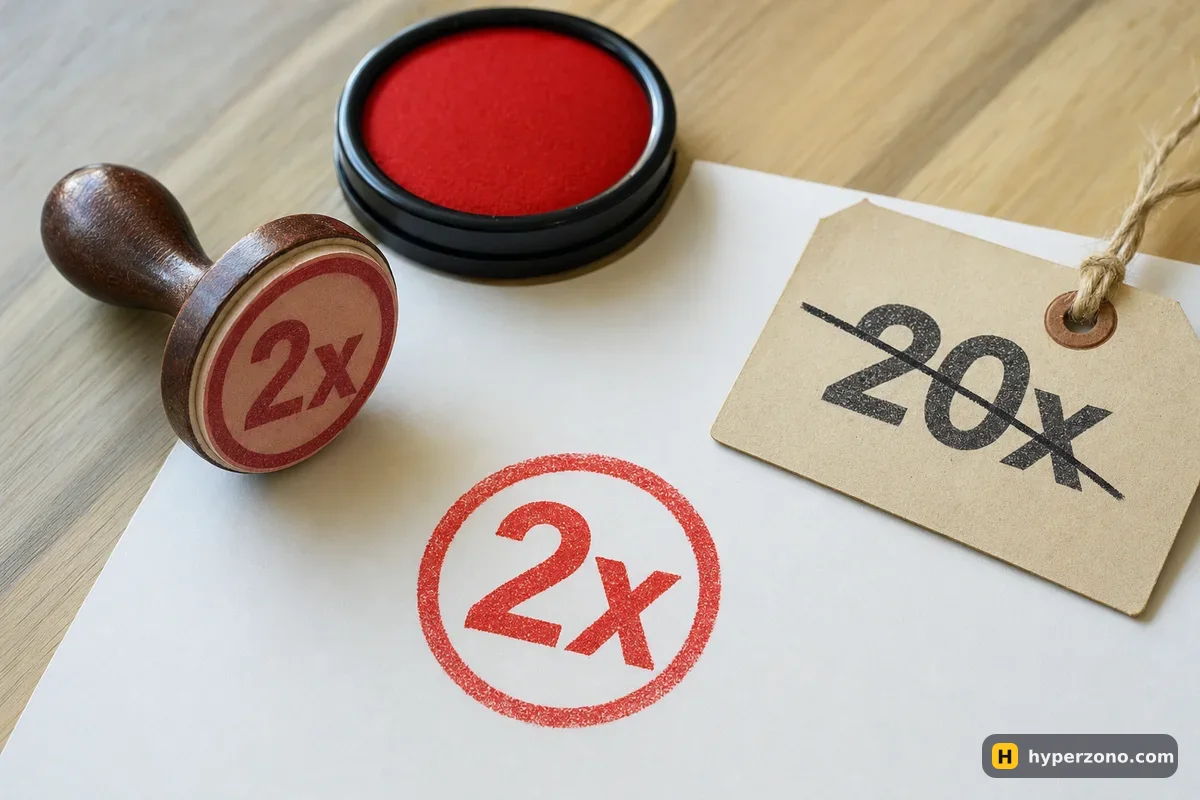
Since 2020, crypto derivatives in Japan sit under the same law as stocks and FX, and that gives you two practical rules. The company you trade with has to be registered with the FSA. And if you are an individual customer, your position can be at most twice the money you put into that trade: put in 100 USDT and the biggest position you can open is 200 USDT. That is 2x, and it is the same limit for bitcoin as for any other coin. The money you set aside for a single trade is called your margin.
The FSA explains the cap simply: crypto prices swing hard, and one number is easier for everyone to follow than a different limit for every coin. The description of the framework we are quoting was published in 2021, so check the current FSA page before you act on the number — the link is at the bottom of this page.
Binance, Bybit, OKX, Hyperliquid and Binance Wallet: where residents stand
Here is what each venue's own documents say about Japan. Read the status column first, then the note — "not confirmed" genuinely means the documents do not name Japan, not that the door is open.
| Venue | Status | What it means |
|---|---|---|
| Binance | Via a local company | The global platform closed for residents on 1 Dec 2023; accounts moved to Binance Japan, a separate company. Products not allowed in Japan were not carried over. |
| Bybit | Not available | Bybit finished its Japan remediation on 22 July 2026: residents can only convert to BTC, ETH or USDC and withdraw. |
| OKX | Not available | Japan is on OKX’s restricted list. |
| Hyperliquid | Not on its banned list | Not named in Hyperliquid’s Terms (they block the US, Ontario and sanctioned territories). |
| Binance Wallet (Aster) | Not confirmed | Japan is not on Aster’s list, but the tab needs a global Binance account, which residents can no longer use. |
Status for residents, from the exchange’s own documents and the local regulator’s actions. “Not on its banned list” does not mean trading is legal where you live: check the local law above, and the app gives the final answer after KYC.
statuses checked 25 Oct 2026 in the exchanges’ own documents, Binance, Bybit, OKX, Hyperliquid, Binance Wallet (Aster), FSA Japan.
Binance announced that the global platform would be discontinued for Japanese residents on 1 December 2023, with accounts moved to Binance Japan, a separate company operating under Japanese registration. Binance Japan has its own product list, so don't assume that a contract you saw on the global futures screen exists in the local app — check what Binance Japan itself lists.
Bybit has stopped trading for residents; what is left of such an account is in the next section. OKX lists Japan as restricted in its Risk & Compliance Disclosure. Hyperliquid's Terms block the United States, Ontario and sanctioned territories and do not name Japan, but that is silence in one company's document, not permission from the FSA. The Binance Wallet Perpetuals tab sits in the same grey area: the terms of Aster, which provides the execution there, do not list Japan, yet the tab needs a Binance account on the global app, which residents no longer have.
What happens to an account you already have
If you opened an account before moving to Japan, or before one of these wind-downs, look at what actually happened in the two known cases. Bybit left Japanese residents with conversion into BTC, ETH or USDC and withdrawal, and nothing else, from 22 July 2026. Binance moved Japanese users to the local company rather than closing them out. Neither of those is a loss of your money; it is a change in what you can do with it.
What you get in both cases is a notice with dates in it — read it the day it arrives rather than a week before the last one. Write the dates down and get your balance somewhere you control well before the final one. Identity checks come into this too, because an exchange tidying up a country will usually confirm where you actually live before it releases anything — what KYC asks for covers that in one page.
Getting around a country restriction is not a shortcut. Binance's terms forbid circumventing restrictions, and the other venues here say something similar. If the exchange later matches your documents, your sign-in history or your bank details to Japan, the account can be frozen with your money inside it, and you are the one who broke the agreement you accepted. There is no version of this where it is the safe option.
What you can do from Japan right now
Registration with the FSA is what makes a company allowed to offer this in Japan, so look the company up on the FSA site before you deposit anything. Then check in the app whether that company offers derivatives at all, not just buying and selling, and expect 2x as the ceiling. We can't pick one for you — that check is the part only you can do.
Low leverage is not a punishment, by the way. At 2x a 10% move against you costs 20% of the money you put in, instead of wiping it out, which is a far gentler place to make your first mistakes than 20x.
While you sort out where you will trade, the mechanics cost nothing to learn: how big a trade to open with 100 USDT, where to put the order that closes it if you are wrong (a stop-loss), and what the small payment every few hours for holding a position (funding) adds up to over a week. None of that needs an account anywhere — paper and a calculator are enough, and the knowledge keeps its value whichever platform you end up using.
Rules and exchange lists change without much warning. Bookmark the source links below, re-check them before you do anything with money, and if you also have ties to another country, our country-by-country index shows how to check any jurisdiction properly.
Can I keep using my Japanese bank card on an offshore exchange?
The card is not really the question — the question is whether that venue accepts people who live in Japan. A Japanese card, bank account or phone number is one of the signals an exchange uses to work out where you are, so using one on a venue that has closed to Japan is trying to get around its rules. On a company registered in Japan, local payment methods are the normal route; check in its app which ones it supports.
I'm a foreigner living in Japan — do these rules apply to me?
Usually yes. Exchanges ask for your country of residence and proof of address, and that is what decides which rules and which products you get, not the passport you hold. Citizenship can matter separately for sanctions screening. The honest way to find out is to go through sign-up and answer truthfully — the app will tell you quickly what is available to you.
What if I move away from Japan?
Then the rules of your new country apply, and the exchange will want an updated address with proof before it changes anything on your account. Do that after you have actually moved and have documents to show, not before. A new country also means a new check: availability, leverage limits and tax rules can all be different there.
Can I still just buy and hold crypto in Japan?
Yes — buying and holding coins on an exchange registered with the FSA is a normal, legal thing to do. The 2x cap and the derivatives rules on this page are about futures and perpetual contracts, which are a different product. Plenty of people start there precisely because there is no leverage and nothing to liquidate.
I run a company in Japan — is it also limited to 2x?
No. The flat 2x applies to individual customers; corporate customers get a margin rate that is recalculated weekly from how much each pair has been moving. What that works out to in practice depends on the pair and on the operator, so ask the company you plan to trade with.
Sources and fact-check
Exchange terms were checked against official documents on October 25, 2026. Terms change — before you trade, check what matters to you in the exchange app and in your contract’s specs.
FSA (Japan): 暗号資産(仮想通貨)に関連する制度整備について