Contents
Why your friends tell you two different thingsWhat the Central Bank actually saysWhich exchanges name Sri Lanka in their rules?Money in and out, and why your card failsWhat happens to an account you already haveWhat you can do from Sri Lanka right nowWhy your friends tell you two different things
Two separate questions get mixed together here, and keeping them apart solves most of the confusion. The first is whether an exchange accepts you — that is decided by the company's own terms and by what its app does after you verify your identity. The second is whether your country's rules allow it — that is decided by Sri Lankan law and by the Central Bank, no matter what an exchange's app lets you tap.
That is why one friend tells you "Binance works fine in Colombo" and another tells you "crypto is banned here". The first one is describing an app that opened for them; the second is describing a regulator that has licensed nobody. Both are real pieces of the same picture, and neither one answers the other's question.
What the Central Bank actually says
The message is short: crypto here is not regulated, nobody is watching over it, and if something goes wrong there is no local authority to go to. In the Central Bank's own words, virtual currencies are "largely unregulated". The document is a public awareness release on the use of virtual currencies, dated 12 July 2022, and it was still the live page on the Central Bank site on 25 October 2026 — nothing newer has replaced it, so open the link in the sources below before you act on anything here.
The release also states plainly that the Central Bank has given no license to any company to run schemes involving virtual currencies, and has authorized no initial coin offerings, mining operations or virtual currency exchanges. It repeats the same position taken in earlier releases from 2018 and 2021, and warns the public about financial, operational, legal and security risks, and about having no customer protection to fall back on.
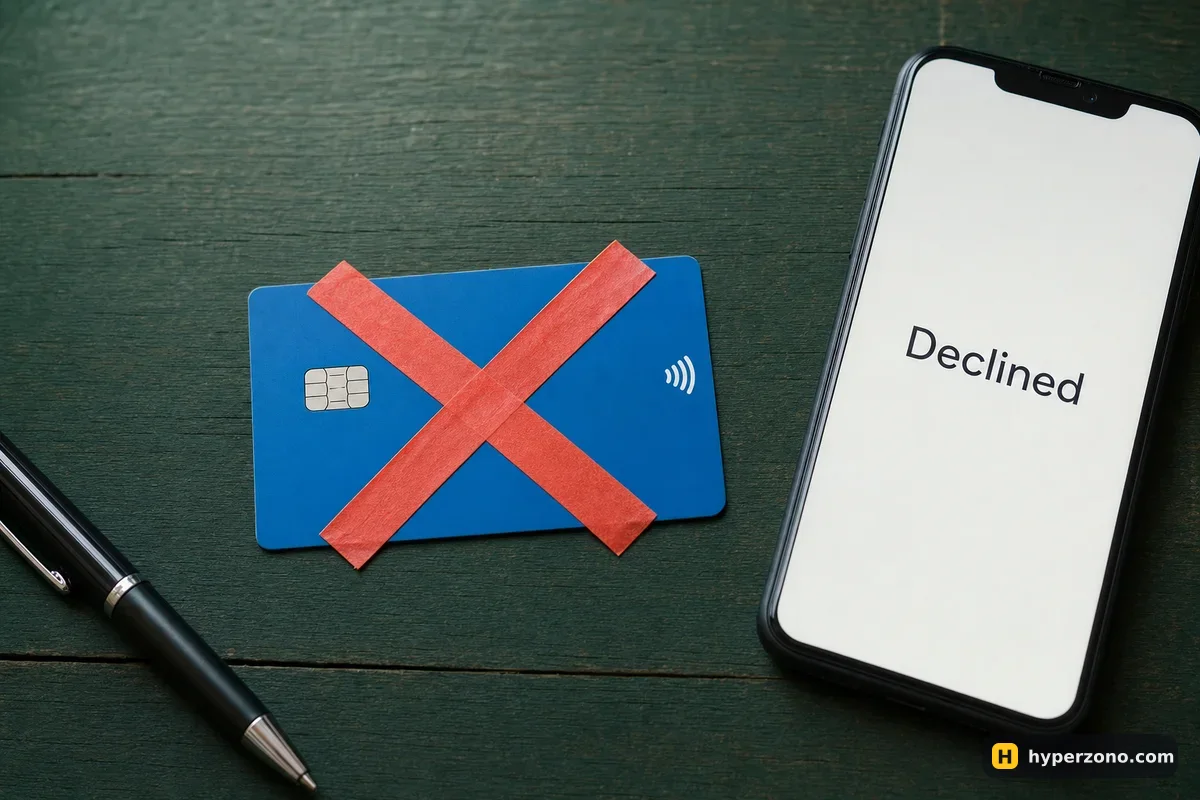
Your Sri Lankan debit or credit card cannot be used to pay for crypto. The rule is Directions No. 03 of 2021 from the Central Bank's foreign exchange department, issued under the Foreign Exchange Act No. 12 of 2017, and it names debit and credit cards directly. Your bank is the one applying it, so another card or another website will not get around it — the payment simply gets declined or reversed.
What the release does not say matters just as much. It does not mention futures, derivatives, perpetual contracts or leverage anywhere, and it does not say that owning or trading crypto is a criminal offence. It says the activity is unregulated and unlicensed. Read it as a warning with no licensing route attached, not as a rule book for leveraged trading.
Which exchanges name Sri Lanka in their rules?
The table shows, venue by venue, whether Sri Lanka appears in that company's own restriction documents. Read every row the same way: a blank row means the company does not name the country — not that futures will open for you, and not that trading them from here is legal.
| Venue | Status | What it means |
|---|---|---|
| Binance | Not on its banned list | Not on Binance’s List of Prohibited Countries. |
| Bybit | Not on its banned list | Not on Bybit’s list of service-restricted countries. |
| OKX | Not on its banned list | Not on OKX’s list of restricted countries. |
| Hyperliquid | Not on its banned list | Not named in Hyperliquid’s Terms (they block the US, Ontario and sanctioned territories). |
| Binance Wallet (Aster) | Not on its banned list | Not on Aster’s list of prohibited jurisdictions; the tab also needs a Binance account. |
Status for residents, from the exchange’s own documents and the local regulator’s actions. “Not on its banned list” does not mean trading is legal where you live: check the local law above, and the app gives the final answer after KYC.
statuses checked 25 Oct 2026 in the exchanges’ own documents, Binance, Bybit, OKX, Hyperliquid, Binance Wallet (Aster), Central Bank of Sri Lanka.
In practice the app decides after you verify your identity — the same account can be allowed to trade spot and still have the futures section closed, and every one of these lists says in its own wording that it is not exhaustive and can change without notice. Hyperliquid's Terms block the United States, Ontario and sanctioned territories and name no other country; the Binance Wallet Perpetuals tab additionally needs a working Binance account, so wherever Binance itself is closed, that tab is closed too. If you want the general mechanics of how availability is decided, how exchange availability works by country covers it once for every country, and the country hub has the same checks for other places.
Money in and out, and why your card fails
The card route is the one that is clearly closed by the Directions, and your bank is the one enforcing it. On the peer-to-peer side, there were live Sri Lankan rupee ads on Binance P2P on 25 October 2026. Which payment methods sellers accept changes from day to day, so look in the app rather than trusting a number on a page like this one. And that observation is not a legal opinion: the Central Bank's release says nothing about P2P, and buying crypto from abroad can run into foreign-exchange rules that sit outside that release entirely.
So before you move any money, assume three things. Your rupees will travel between private individuals, with no licensed intermediary standing behind the deal. Your bank may ask what the transfer is for. And if the trade goes wrong, there is no local regulator to complain to, because the Central Bank has already said this activity sits outside its oversight. If the amounts matter to you, a short conversation with a Sri Lankan lawyer or accountant is worth more than any page on the internet, including this one.
What happens to an account you already have
If you already hold an account and Sri Lanka is not named in its restriction list, nothing automatic happens today. What you should plan for is the pattern seen in other countries: an exchange decides to stop serving a place, gives notice, and moves affected users to a withdrawals-only mode where you can take money out but not open new positions. Keeping a modest balance there and your own records of deposits and trades is simply a sensible habit, not a prediction.
One thing to avoid completely: a foreign address, someone else's documents or any other trick to make an app behave as if you live somewhere else. Exchange terms explicitly forbid getting around country restrictions. Nobody gives you a warning first. The account simply freezes with your money inside, and then they ask for documents you cannot provide. Verify with your real country and your real documents; what identity checks actually ask for walks through the process.
What you can do from Sri Lanka right now
Given the uncertainty, the sensible order is to learn first and decide about money later. The mechanics of a futures trade — long and short, margin, leverage, where the liquidation price sits, what fees and funding take out of a result — are the same everywhere and cost nothing to learn. Learning futures without risking money shows how to practice the whole cycle on paper and in simulators, and what crypto futures are in plain words is a good first stop if the terms are still new.
Keep the sources at the bottom of this page bookmarked. Regulator positions and exchange country lists both change without announcement, and a single visit to the Central Bank page or to an exchange's restriction document will tell you more about today than any second-hand summary.
Is Binance legal in Sri Lanka?
Sri Lanka is not on Binance's List of Prohibited Countries as of 25 October 2026, and the Central Bank's public notice names no exchange at all. But the Central Bank has licensed no virtual currency exchange here, so Binance is not authorized to operate in Sri Lanka either. That is a gray area rather than a clear yes or a clear no.
Is Binance P2P legal in Sri Lanka?
The Central Bank's release does not mention peer-to-peer trading, so it neither permits it nor prohibits it in writing. What can be said is that rupee ads were live on Binance P2P on 25 October 2026, and that buying crypto from abroad may touch foreign-exchange rules that sit outside that release. For anything beyond small amounts, ask a local lawyer or accountant.
Why does my Sri Lankan debit or credit card get declined when I try to buy crypto?
Because local cards cannot be used to pay for crypto at all. The rule is Directions No. 03 of 2021, issued under the Foreign Exchange Act, and it names debit and credit cards directly. Your bank is following it, so trying a different card or a different merchant will not fix it.
Is Bybit available in Sri Lanka?
Sri Lanka is not on Bybit's list of service-restricted countries as of 25 October 2026. That means Bybit's own documents do not name the country; it does not mean the derivatives section will open for you, since the app decides after identity verification and the list itself says it is not exhaustive.
Can I sign up with a foreign address to trade futures from Sri Lanka?
No, and this page will not help with it. Exchange terms forbid getting around country restrictions, and a mismatch between your documents and your location is exactly what triggers an account freeze. Your money then sits locked while the support team asks for proof you cannot give them.
Could the Central Bank's position have changed since 2022?
The release is dated 12 July 2022 and was still the live page on the Central Bank site on 25 October 2026, with nothing newer replacing it. Positions like this do change, and without an announcement. Open the Central Bank link in the sources below before you make any decision, and check the exchange's own restriction page the same day.
Sources and fact-check
Exchange terms were checked against official documents on October 25, 2026. Terms change — before you trade, check what matters to you in the exchange app and in your contract’s specs.
Central Bank of Sri Lanka: Public Awareness in Relation to the Use of Virtual Currencies in Sri Lanka