Contents
The short answer, and the two questions behind itWhat the regulator allows, and why "professional investor" mattersBinance, Bybit, OKX and the wallet route: where residents standIf you already have an accountWhat you can sensibly do next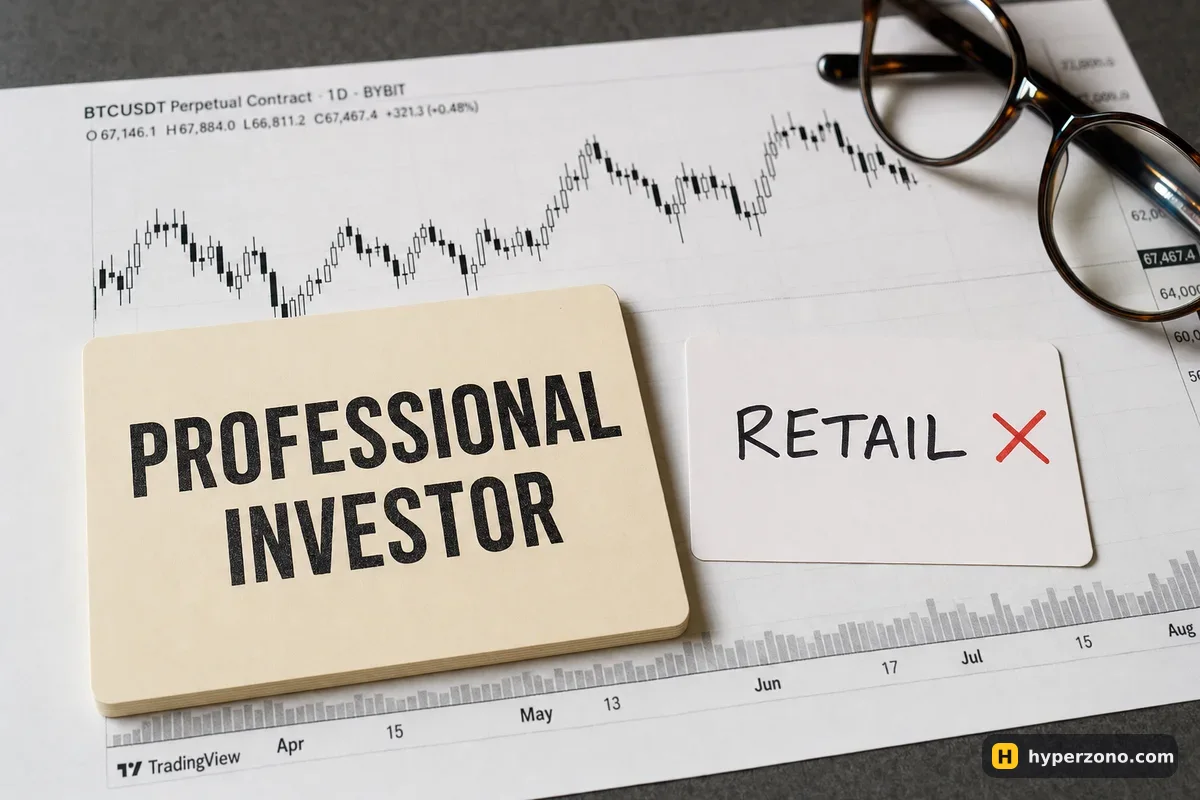
The short answer, and the two questions behind it
People mix up two separate questions, and that is why you hear "banned" from one friend and "totally fine" from another. The first question is whether the exchange accepts you: that is the exchange's own decision, written into its terms and enforced when you sign up. The second is whether the product may legally be offered to you here — Hong Kong's financial regulator, the SFC (Securities and Futures Commission), decides that. Today both answers point the same way: the big offshore exchanges will not give you futures, and the local rules reserve perpetuals for professional investors on platforms that have not launched them yet.
Binance has the most confusing reputation of the three. Its 2021 notice shut futures, options, margin and leveraged tokens for Hong Kong users, and no later notice has reopened them. That is a product closure, not a statement that the exchange is illegal here. For your own legal position a local adviser is the right place to go; this page only sets out what the exchanges and the regulator have published.
What the regulator allows, and why "professional investor" matters
In February 2026 the SFC published a high-level framework for perpetual contracts on licensed virtual asset trading platforms. Read it for what it is: a set of conditions the regulator would expect, with licensed platforms still being invited to submit how they would build such a contract. Nothing in it means a product is on sale — it is a rulebook waiting for someone to use it, and it covers licensed platforms only, saying nothing about overseas venues.
The headline rule for you is who may be offered one. Perpetuals should go to professional investors only, as defined in the Securities and Futures Ordinance. The reason given is plain: these contracts are new in Hong Kong and carry different risks from the products people are used to. The framework publishes no portfolio thresholds, so that definition in the Ordinance is where to look if you want to know whether you qualify.
Even a professional investor would not simply get a button. The platform first has to check that you understand derivatives. And the conditions on the contract itself are strict: the platform must hold the full deposit for your trade before the order is accepted — that deposit is your margin — and it is not allowed to lend you that money. It also has to show you live what your position is worth and what holding it costs. That holding cost is the funding payment — longs and shorts pay each other for keeping the contract open, and here it would be settled at least once a day. The rules also spell out the order in which a platform must unwind a position it can no longer cover, and it must tell clients within a day if it had to close profitable positions to balance the books.
Binance, Bybit, OKX and the wallet route: where residents stand
Here is where each venue stands for a Hong Kong resident, taken from the venues' own terms and notices. Read the "not confirmed" rows exactly as written: they mean the documents do not name Hong Kong, not that the door is open.
| Venue | Status | What it means |
|---|---|---|
| Binance | Restricted | Binance closed all futures, options, margin and leveraged tokens for Hong Kong users in 2021. |
| Bybit | Not available | Hong Kong is on Bybit’s restricted list. |
| OKX | Not available | Hong Kong is on OKX’s restricted list. |
| Hyperliquid | Not on its banned list | Not named in Hyperliquid’s Terms (they block the US, Ontario and sanctioned territories). |
| Binance Wallet (Aster) | Not confirmed | Hong Kong is not on Aster’s list, but Binance closed derivatives for Hong Kong users. |
Status for residents, from the exchange’s own documents and the local regulator’s actions. “Not on its banned list” does not mean trading is legal where you live: check the local law above, and the app gives the final answer after KYC.
statuses checked 25 Oct 2026 in the exchanges’ own documents, Binance, Bybit, OKX, Hyperliquid, Binance Wallet (Aster), SFC.
Bybit and OKX are the simplest cases: Hong Kong appears by name on both restricted lists, so a Hong Kong account is not on offer at all. Binance sits in the middle — the futures side closed for Hong Kong users in 2021, which is why searching "Binance futures Hong Kong" turns up an announcement rather than a product page. Hyperliquid's terms block the United States, Ontario and sanctioned territories and do not name Hong Kong, but the absence of a ban in one document is not permission from anyone, and it says nothing about how local law treats your trading.
The Perpetuals tab inside Binance Wallet is the least clear case of all. Aster's terms, which cover the execution side, do not list Hong Kong, yet the tab still sits inside a Binance account, and Binance closed derivatives for Hong Kong users. So the honest status is "not confirmed either way", and what you actually see in the app after identity checks is what settles it. The general mechanics of how access gets decided country by country are on our regional availability page, and the country index lists the other places covered.
A foreign address does not fix this. Exchange terms specifically forbid getting around country restrictions, and signing up with an address you do not live at is a false declaration at verification. The outcome is rarely a quiet workaround: it is frozen withdrawals and a long argument with support while your money sits there. It also changes nothing about the local rules that apply to you.
If you already have an account
When an exchange restricts a country it usually keeps some path open for withdrawals while closing new trading, but the shape of that path differs every time, so the notices inside your own app and the emails support sends you are what matter. Deposit and withdrawal routes — card, bank transfer, P2P — depend entirely on the exchange you are already using, and the terms in your app are the only reliable place to read them.
Keep your records either way: trade history, deposits, withdrawals. They are far easier to export while the account still works normally, and your identity verification details are the first thing support will ask for if anything gets locked.
What you can sensibly do next
If you are a retail client in Hong Kong, the realistic position today is that no clearly open, clearly compliant route to crypto perpetuals is sitting in front of you. That is frustrating, but it is not a dead end: the part of trading that takes longest to learn costs nothing and needs no exchange account. What a long and a short actually do, how margin differs from position size, where a liquidation price comes from and what funding costs per day — that knowledge is identical in every country.
Learn the mechanics on paper first: draw a trade on a chart, write down your entry, your stop and your size, then count the result yourself, fees included. Demo accounts on the big exchanges sit behind a normal account, so check whether you can even open one before you count on it. Two things are worth bookmarking as well — the regulator's framework, where any change for licensed platforms will appear first, and the restriction pages of the exchanges you care about, all linked at the bottom of this page. Lists and rules change without warning.
Is Binance legal in Hong Kong?
Hong Kong is not on Binance's list of prohibited countries, so holding an account is a different question from trading futures. What is clear is narrower: Binance closed futures, options, margin and leveraged tokens for Hong Kong users in 2021. For your personal legal position, ask a local adviser rather than a forum.
Can I trade Binance futures in Hong Kong?
No. Binance's own 2021 notice closed futures and the other leveraged products for Hong Kong users, and no later notice has reopened them. The spot side of the app is a separate matter from the futures side.
Is Bybit available in Hong Kong?
Hong Kong is named on Bybit's service-restricted list, last updated 16 October 2026, so Bybit does not serve residents there. OKX names Hong Kong on its restricted list too.
Does any licensed Hong Kong platform offer perpetual contracts?
Not as far as the regulator's own pages show. The SFC set out the conditions in February 2026 and is still inviting licensed platforms to propose how they would build such a contract, so there is a rulebook but no product to sign up for. Check the SFC page before believing anyone who tells you otherwise.
Who counts as a professional investor for perpetuals in Hong Kong?
The SFC points to the definition in the Securities and Futures Ordinance and publishes no portfolio figures in the framework itself. On top of qualifying, a platform would have to check that you understand derivatives before letting you trade them.
Can I just sign up with an address in another country?
No. Exchange terms forbid getting around country restrictions, and a false address at verification puts your withdrawals at risk — usually at the worst moment, when you want your money out. It also does nothing about the local rules that apply to you.
Sources and fact-check
Exchange terms were checked against official documents on October 25, 2026. Terms change — before you trade, check what matters to you in the exchange app and in your contract’s specs.
SFC: A high-level framework for virtual asset perpetual contracts offering by virtual asset trading platforms