Contents
What the law actually says right nowWhat the big exchanges' own country lists sayIf you already have an accountTax: the part that is already in forceHow to start small while the rules are still moving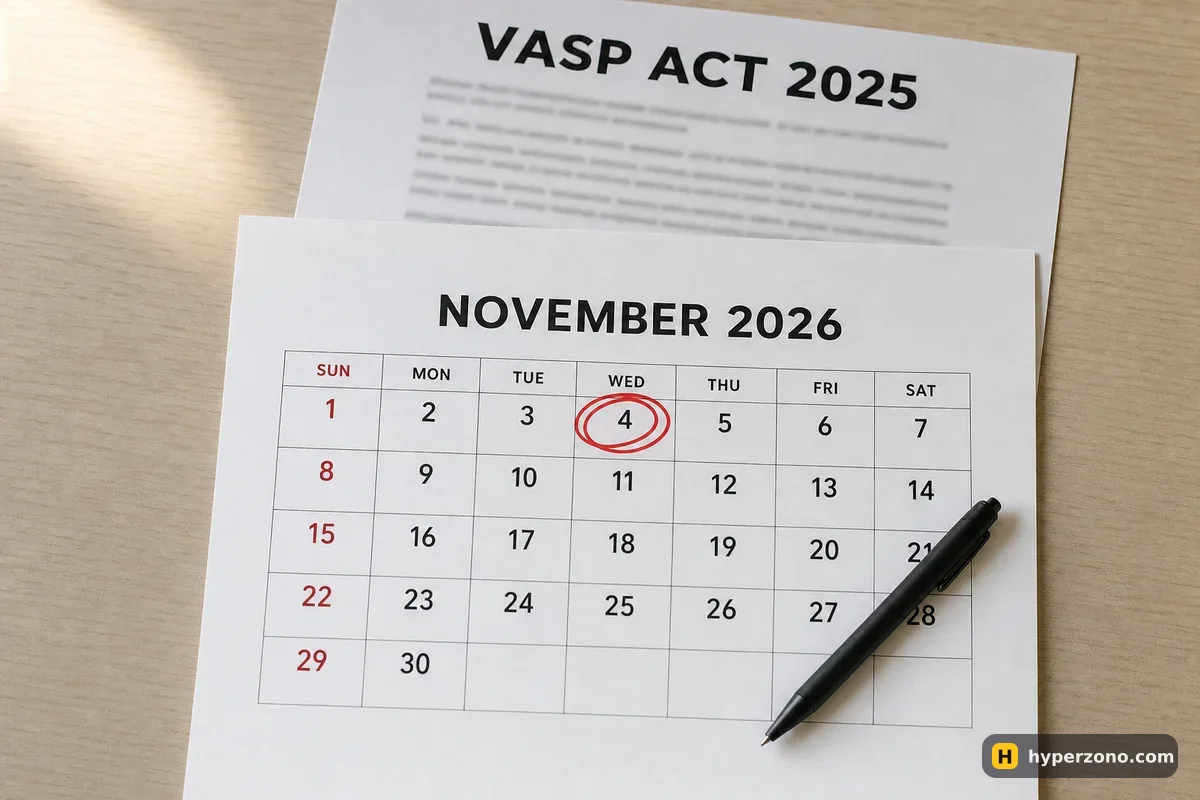
What the law actually says right now
The law was published on 21 October 2025 and started working on 4 November 2025. It says which companies need a licence to offer crypto services in Kenya, and what checks those companies must run against money laundering. The Central Bank and the Capital Markets Authority are the two bodies that hand out those licences — nothing in it asks you, as a user, to register anywhere.
One honest gap is worth knowing from the start. The Central Bank's notice does not single out crypto derivatives as their own licence category, so nobody should tell you a platform is "licensed in Kenya for futures" without showing you exactly which licence they mean.
Licensing has not been opened yet either. In its notice of 18 November 2025 the Central Bank said the Treasury was still drafting the Regulations, that licensing would begin once those were issued, and that neither regulator had licensed any provider to operate in or from Kenya at that point. What you can actually watch is your exchange's own announcements. A foreign exchange serving Kenyan users can apply and get licensed, can keep spot but limit leveraged products, or can decide Kenya is not worth the paperwork — and the general version of how exchanges handle country rules is in which futures exchanges are available in my country.
Two email addresses worth saving. If you want an answer straight from the regulator rather than from a forum, CBK gives vasp@centralbank.go.ke (+254 20 2860000/1000) and CMA gives virtualassets@cma.or.ke (+254 20 2264400 or 0722 207767) for questions about the Act.
What the big exchanges' own country lists say
Kenya is not on Bybit's Service Restricted Countries page (last updated 16 October 2026), not on Binance's list of prohibited countries, and not on OKX's restricted list. OKX does block derivatives in a handful of places — Australia, Brazil, South Korea and the United Kingdom — and Kenya is not one of them. In short, nothing published by those three exchanges closes futures to a Kenyan resident today.
These lists are deliberately open-ended. Bybit says its list names only some of the countries it blocks, and that it can add more whenever it decides to. And no exchange anywhere publishes a list of countries where futures definitely work. That is why the sign-up screen is the only real test: start a Binance sign-up, put Kenya as your country of residence and see which products the app actually opens for you. Your ID and proof of address work the same way as anywhere else, as described in what documents you need for KYC.
If you already have an account
Export your records now rather than later: trade history, deposits, withdrawals, fee reports. If an exchange ever announces restrictions for Kenya, the announcement itself will carry the dates and the limits — usually a period where you can only close what is already open and withdraw, and nothing new can be opened. Follow those dates instead of guessing, and finish your closing and withdrawing well before the last one.
Never give a false country of residence to keep access, and don't try to hide where you are connecting from. Bybit says plainly that if it finds a user has misrepresented their location or residence, it may terminate the account immediately and liquidate open positions — other exchanges have comparable clauses, and a frozen balance is a far worse problem than a closed product. If a local platform advertises itself as licensed here, check that claim against the CMA register before you send it any money.
Tax: the part that is already in force
From 1 July 2025 the Finance Act, 2025 applies a 10% excise duty to the fees that virtual asset providers charge on crypto transactions. It lands on the fee, not on your position size. Say you open a 500 USDT position and the exchange takes 0.05% to enter — that is 0.25 USDT, and the 10% lands on that quarter of a dollar, so about two and a half cents. The KRA notice does not spell out which providers' fees are caught, so don't assume it automatically applies to a foreign exchange's futures fees.
Income tax on trading gains is a separate question and this page cannot answer it for your situation. Keep clean records from your first trade, read KRA's own guidance, and if the amounts matter to you, pay a Kenyan tax adviser for an hour of their time.
How to start small while the rules are still moving
Funding comes first. Deposit methods for Kenya are shown inside the app on the deposit screen — card, bank transfer or P2P, depending on what the exchange offers you that day — so open that screen and see what actually appears before you plan anything; how to fund a futures account for the first time explains the steps in order.
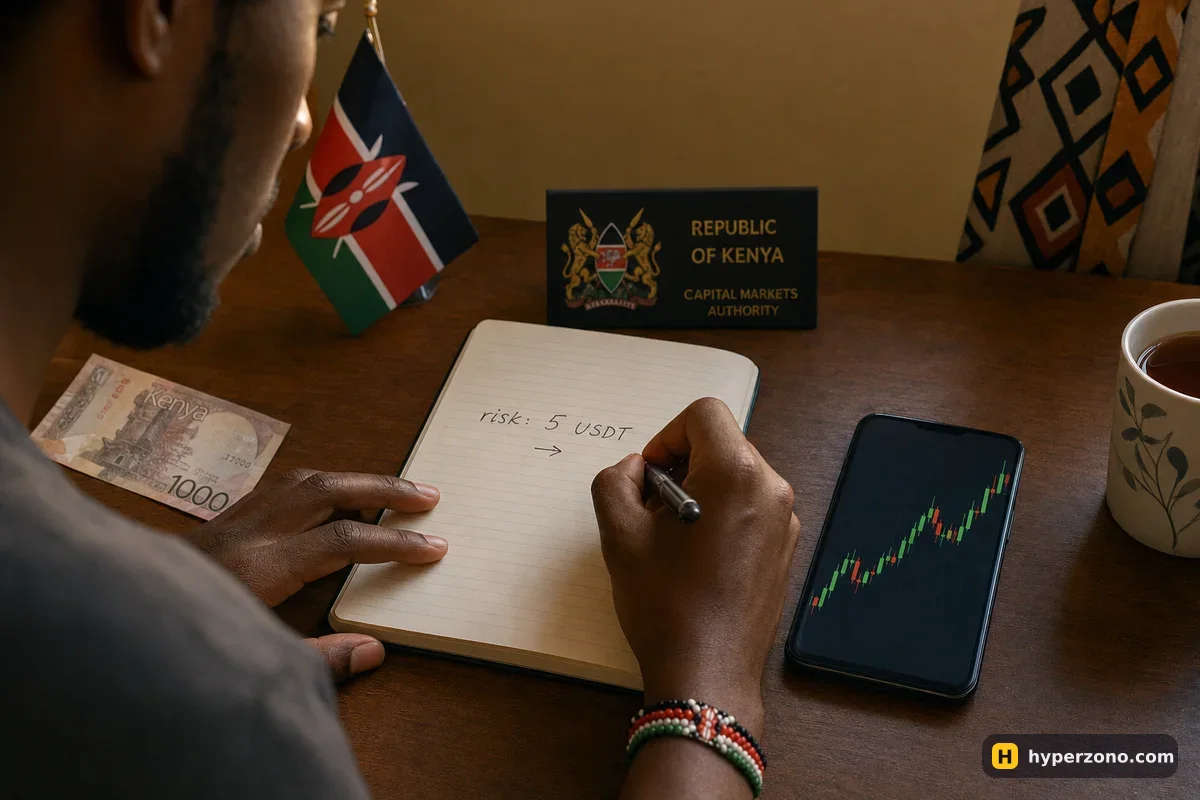
Then keep the first trades deliberately tiny. Put in an amount you are genuinely fine losing, choose isolated margin so only the money attached to that one trade is at risk, and set a stop-loss at the same moment you open the position rather than later. On bitcoin the smallest position on Binance is 0.001 BTC, so most beginners start on a cheaper coin where contracts begin from about 5 USDT of position size. While the licensing picture is still moving, there is no reward for holding a big position — small size costs you almost nothing and teaches you the same lesson.
Is crypto trading legal in Kenya in 2026?
Crypto is not banned. Since 4 November 2025 the VASP Act regulates the companies that provide crypto services, with the Central Bank and the Capital Markets Authority as regulators. The Act is aimed at those companies, not at you. There is no Kenyan rule telling you personally that you may not trade futures on a foreign exchange.
Will my Binance or Bybit account be frozen because I live in Kenya?
Kenya is not named on Binance's prohibited-countries list, on Bybit's Service Restricted Countries page (updated 16 October 2026) or on OKX's restricted list. Those lists are not complete and can change without notice, so check them again at sign-up and watch for exchange announcements rather than assuming the status is permanent.
Do I have to wait for an exchange to get a Kenyan licence?
Nothing stops you from using an exchange that is currently open to Kenyan users, and as of the Central Bank's November 2025 notice no provider had been licensed yet. Just be clear-eyed about it: if the platform later restricts Kenya, you will get an announcement with dates, and your job is to close positions and withdraw inside that window.
Does the 10% tax apply to my profit?
No. Since 1 July 2025 there is a 10% tax on the fee a crypto provider charges you — so if a trade costs you 0.25 USDT in fees, the tax is about 2.5 cents. KRA's notice doesn't say which providers are caught, so don't assume it lands on a foreign exchange's futures fee — your profit is a separate question anyway, and one for KRA or a tax adviser.
What if Kenya gets blocked later — can I just change the country on my account?
No. Exchanges treat a false location or residence as grounds to close the account and liquidate open positions, and you would be arguing about your own money from a very weak position. If access changes, withdraw inside the announced window and keep the records.
How much money do I need to try futures from Kenya?
Less than most people expect — the limit is the exchange's minimum order size, not a big deposit. On Binance the smallest bitcoin position is 0.001 BTC, while most altcoin contracts start from about 5 USDT of position size. Start with an amount you can afford to lose completely.
Sources and fact-check
Exchange terms were checked against official documents on November 6, 2026. Terms change — before you trade, check what matters to you in the exchange app and in your contract’s specs.
Central Bank of Kenya: Public Notice – Commencement of the Virtual Assets Service Providers Act, 2025Kenya Revenue Authority: Excise duty introduced by the Finance Act, 2025Bybit Help Center: Service Restricted Countries