Contents
Why the door is closed, and since whenBanco Central's new rules are about something elseWhat each exchange says in its own documentsI already have an open futures position — what now?What is actually open to you in BrazilWhat about tax?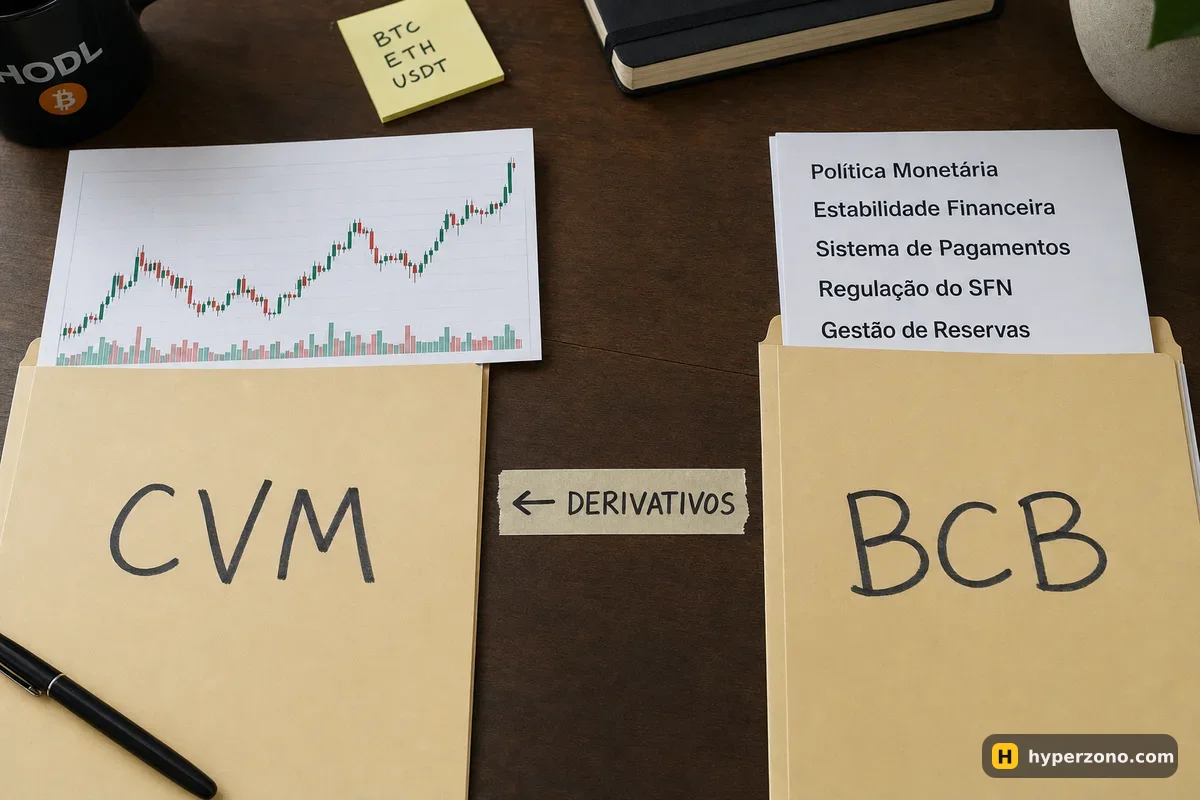
Why the door is closed, and since when
In Brazil a futures contract counts as the same kind of regulated product as a share or a bond. Anyone who wants to sell it to Brazilians has to be registered with CVM, the market regulator. Binance Futures was not — so in July 2020 CVM published an order telling it to stop offering the product here (Ato Declaratório 17.961).
What triggered it is easy to picture. Before the order, CVM staff found a Portuguese-language Binance Futures page offering leveraged crypto futures and account opening in a matter of seconds, with nothing stopping a Brazilian resident from signing up. The file also records complaints in 2021 and 2022 that people in Brazil could still reach the derivatives pages by switching the site to its Portugal version, so the door did not shut the same week the order was signed.
In 2024 the company behind the offer proposed paying CVM R$ 9.6 million to settle, and CVM's settlement committee recommended accepting it. A settlement is not a guilty verdict. Either way, the case was about who may offer these contracts in Brazil — the accused party was the company, not the people who traded. If you want certainty about your own past trades, that is a question for a Brazilian lawyer or a contador.
So the short history is this: CVM ordered the offer to stop in July 2020, the case carried on for a few more years, and today Brazil is among the countries where Binance does not offer derivatives. If you saw it working at some point in between, that is the background — but it is not open to you now.
Banco Central's new rules are about something else
Most Brazilian crypto news in 2026 is about Banco Central, not CVM, and it is about a different thing: the rules for companies that buy, sell and hold crypto for you (Resolução BCB nº 520, November 2025). Those rules list what such a company may do — trade crypto for clients, keep it in custody, manage portfolios — and say nothing about derivatives. A Brazilian platform getting its licence does not mean futures are coming with it.
The same rule gives companies set windows to tell Banco Central they are starting: one that was not already active may begin only 90 days after it notifies the BCB, and one already working has 270 days from the effective date to do so. If a platform tells you it is "about to be licensed", check that on the Banco Central site rather than in a news summary. That costs you one minute and keeps you from planning around somebody else's wishful timeline.
What each exchange says in its own documents
Country rules are one layer; each exchange's own paperwork is another, and that second layer is the one you actually hit when you tap the futures tab. Here is what the venues themselves put in writing, with the date on each document.
| Exchange | What its own material says about Brazil | Checked |
|---|---|---|
| Binance | Brazil is among the countries where Binance derivatives are not offered. There is no official Binance page listing where futures *are* available. | October 2026 |
| OKX | The Risk and Compliance Disclosure says OKX "may restrict services" in Brazil, "specifically regarding our derivatives-related and P2P services". | 8 July 2026 |
| Bybit | Brazil is not on Bybit's restricted-countries list, but Bybit does not publish a separate derivatives list — a June 2026 campaign page did name Brazil. Check inside the app. | October 2026 |
Binance is the clear case. OKX only writes that it may restrict derivatives here, so treat it as closed but confirm in the app. For Bybit nobody can promise you an answer from the outside: the general restricted list does not name Brazil, and there is no published derivatives list to check. The reliable test is the sign-up and the futures section inside the app with your real residency, which is the same rule described on our page about which exchanges are available in your country.
Do not try to get around a country block. Exchange terms forbid reaching a restricted service by hiding where you are or by using someone else's documents, and the usual result is a frozen account and a slow fight to get your money back. The Brazilian question here is about who may legally offer the contract to you in the first place, and disguising your location does not change that. Sign up the normal way with your real details — our scam and safety checks page shows what to look at before you trust a venue with money.
I already have an open futures position — what now?
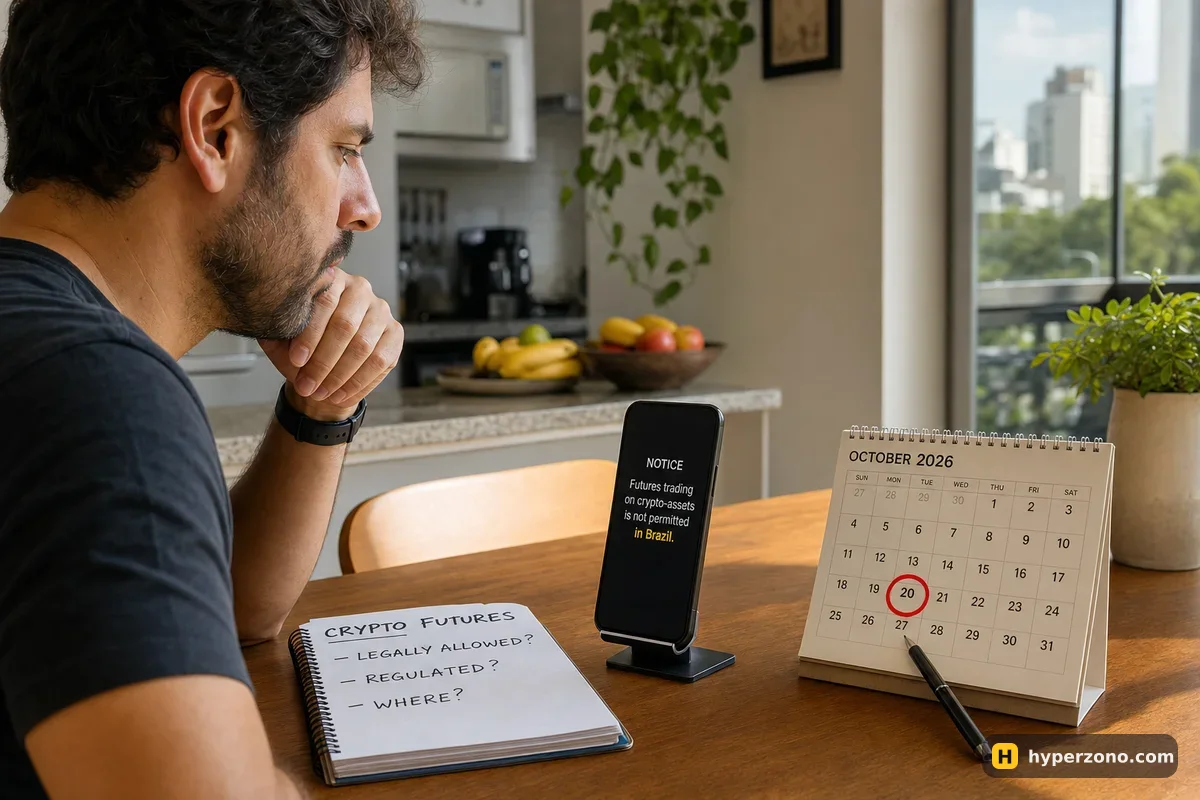
Dates that circulate in blog posts and Telegram groups about Brazilian users are often wrong or out of date. Open the announcements and support section inside your own account and read the notice that applies to you; that is the only version that binds your account. If the exchange also offers you a move to a different legal entity, read what it says about which regulator does and does not supervise that entity before you accept anything.
The pattern from other countries is worth knowing, because it repeats. When Binance stopped derivatives in Australia it closed new futures accounts first, then restricted the product; in the Netherlands it stopped taking new users and later allowed withdrawals only. In almost every case there is a date after which you can no longer open or increase a position and can only reduce or close it.
Find the notice, note every date
Write down the date when new positions stop, the date when the product closes, and the date when withdrawals change. They are usually three different dates.
Close rather than be closed
Do not sit on an open position into the final hours of a product's life. Liquidity usually gets thinner and the price can move more than usual; closing a few days early costs you only the normal fee.
Move the balance where you can still reach it
Once the position is flat, move the money to a place you will keep access to under the new arrangement.
Export your records before anything closes
Trade history, funding payments, fees, deposits and withdrawals. If an account or a product disappears, so can the convenient export button.
What is actually open to you in Brazil
Buying and holding crypto is a different activity from trading derivatives, and it is the one Banco Central's framework covers. If what you wanted from futures was simply to profit when bitcoin goes up, spot does that without leverage, without funding and without liquidation — the comparison is laid out on our page about spot or futures for a beginner.
For anything with leverage, or a contract on an index or a commodity, the regulated route in Brazil runs through CVM-authorised intermediaries and listed products. Which crypto-linked funds and contracts are listed changes over time, so ask a licensed Brazilian broker directly what is available today, what the minimum size is and what it costs. One message, and you get an answer that is true today, for your country, from someone who has to stand behind it.
And if the real goal is to understand the mechanics — how a long differs from a short, what a stop-loss does, how a liquidation price is worked out — you can learn all of that with no money and no account. Learning futures without risking money covers paper trading and demo modes, and the mechanics are the same wherever you eventually trade. If you move country or travel, start again from the country rules page rather than assuming the answer travels with you.
What about tax?
Tax is a separate question from who may offer you the contract, and one does not settle the other. Keep every trade, fee, funding payment, deposit and withdrawal, with dates and the platform's name, and take that record to a contador. Check the current rules on the Receita Federal site rather than on a forum, and keep the records even if the account later closes.
Is it illegal for me personally to trade crypto futures in Brazil?
CVM's case was about who may offer and distribute these contracts here, and the accused party was the company behind the offer, not its Brazilian users. That is not legal advice and this page is not written by lawyers. If you need certainty about your own position, especially if you already traded, ask a Brazilian lawyer or a contador.
Binance futures worked for me before — what changed?
CVM ordered the offer to stop in July 2020, the case carried on for a few more years, and today Brazil is among the countries where Binance does not offer derivatives. If you saw it working at some point in between, that is the history behind it — but it is not open to you now. Read the notice in your own app rather than a summary of it.
Does Bybit allow derivatives for Brazilians?
There is no honest yes or no from the outside. Brazil is not on Bybit's published restricted-countries list, the exchange does not publish a derivatives-specific list, and a June 2026 campaign page did name Brazil among restricted derivatives jurisdictions. The answer that counts is the one the app gives you with your real residency details.
Can I use a wallet-based DEX instead, since its terms do not name Brazil?
A venue not naming your country never means the activity is allowed where you live — in Brazil the rule is about derivatives counting as regulated securities, wherever the venue sits. If you want a clear answer for your own situation, that is a question for a Brazilian lawyer.
Can I still buy and hold crypto in Brazil?
Yes, holding crypto is a different activity from trading derivatives, and it is the one Banco Central's rules for crypto service providers cover. Use a provider properly set up under those rules, and treat leverage as a separate question with a separate answer.
Sources and fact-check
Exchange terms were checked against official documents on November 9, 2026. Terms change — before you trade, check what matters to you in the exchange app and in your contract’s specs.
CVM: Parecer do Comitê de Termo de Compromisso 606, PAS CVM 19957.008369/2022-11 (B Fintech / Binance Futures)Resolução BCB nº 520 de 10/11/2025 (virtual asset service providers)OKX: Risk and Compliance Disclosure (last updated 8 July 2026)