Contents
What the German rules actually stopNachschusspflicht, in plain wordsA crypto licence is not permission to sell you futuresWhich exchanges are affectedWhat happens to an account you already haveTax in Germany, briefly and honestlyWhat the German rules actually stop
Two orders from the German financial regulator BaFin sit behind all of this, and they do different jobs. The one that matters most here took effect on 1 January 2023: from that date a firm selling to private clients based in Germany may not sell them futures, except in a few narrow cases — and the main one is a contract where it has been written in that you can never lose more than the money on that account. These orders are aimed at licensed firms — the sort with a European investment permission. A global crypto exchange normally doesn't have one, so instead of capping your leverage it simply doesn't offer futures to people in Germany at all.
The order talks about futures in general. It never says the word crypto and never mentions perpetual contracts, so whether a crypto perpetual counts is not spelled out anywhere in it. What you see on screen is the practical outcome rather than a line-by-line application of the text.
The older order, from July 2019, is about contracts for difference (CFDs). When the underlying is a cryptocurrency, a firm selling a CFD to a private client has to collect 50% of the contract value as margin, close positions automatically at a set margin level, and make sure the client's loss on that account stops at the money in it. That is a different product from a perpetual contract on a crypto exchange, so do not expect the two sets of rules to look the same on screen.
The futures order leaves three doors open. A firm may still sell futures to a private client in Germany when:
- the firm writes into the contract that you can never owe more than the money on your account;
- you confirm before each trade that the trade protects something you already own, such as a position or a portfolio;
- the trade only closes or winds down a position you opened before the order took effect in 2023.
Nachschusspflicht, in plain words
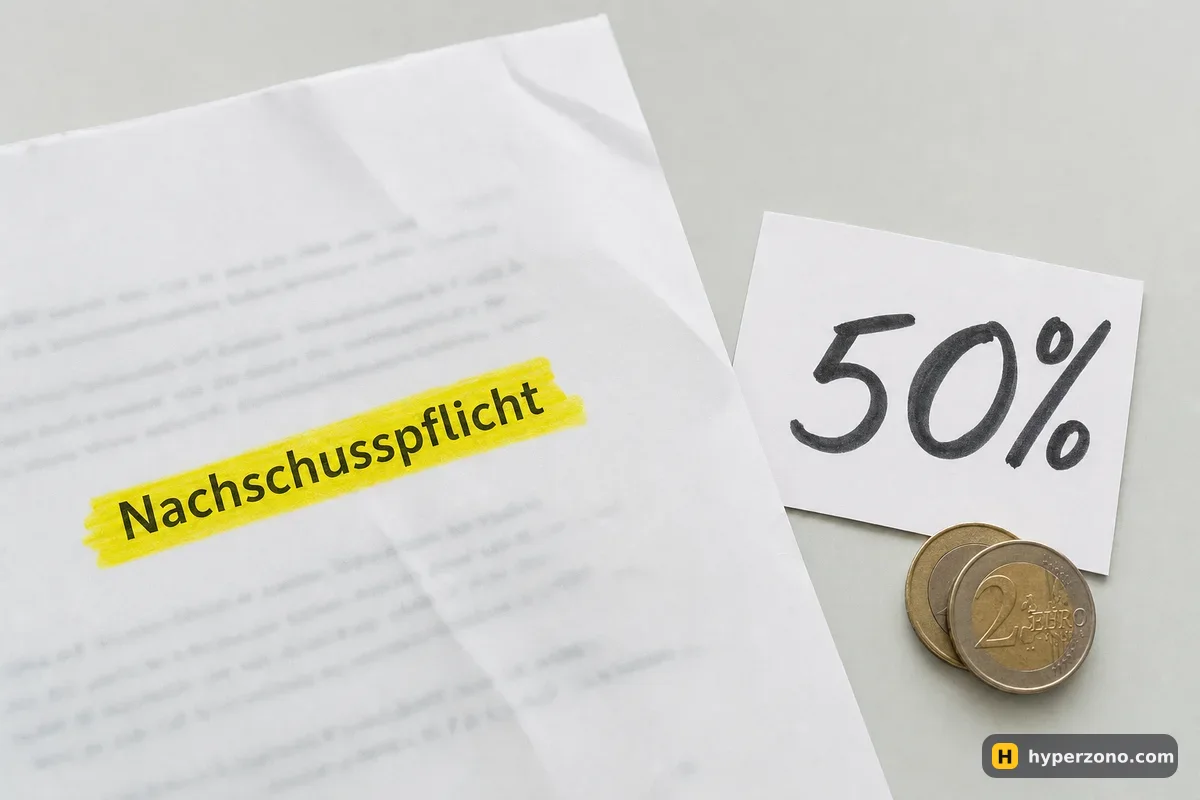
Nachschusspflicht means having to pay more after your margin is gone. BaFin describes it as the duty of a private client, once the firm has force-closed their contracts, to cover whatever loss is left out of their other money. The regulator's own CFD example is blunt: you put up 2,000 euros of margin, the loss comes to 10,000 euros, and the remaining 8,000 euros has to come from the rest of your savings. If you want to see how a loss can run past your deposit on a crypto platform, and how exchanges try to stop that, read can you end up owing the exchange money.
A crypto licence is not permission to sell you futures
This catches a lot of people out. A European crypto licence shown on a platform's homepage does not mean that platform may sell you leveraged contracts in Germany. Look at what the platform itself says about derivatives for German residents — in its terms, its country pages and during sign-up — and if anything about the offer feels pushy or vague, run it through our checks for spotting a fake exchange before you send a single euro.
Which exchanges are affected
Binance published a notice on 30 July 2021 titled "Unavailability of Futures and Derivatives Products in Germany, Italy, and the Netherlands". It said the company was winding those offerings down in the three countries, that users there could not open new futures or derivatives accounts with immediate effect, and that from a later date they would have 90 days to close open positions. The page still carries its 2021 date, and we could not find a newer official notice from Binance since, so treat it as the last word we were able to confirm rather than a fresh statement. It says nothing about withdrawals or about any close-only mode, so do not assume either.
Gate's user agreement lists Germany among its restricted locations, and the same terms say a restriction can cover only part of the services — so you would have to see what is actually switched on for a German account. OKX's restriction page does not name Germany, but it also never says futures are offered there. Bybit serves the European Economic Area through a separate company, Bybit EU GmbH, with its own account at bybit.eu; its global list of service-restricted countries does not name Germany. What bybit.eu actually offers a German resident is something we could not confirm from an official page — you will see it during sign-up.
The wider picture across countries is in which futures exchanges are available where you live, and neighbours with similar restrictions have their own pages, such as the Netherlands. Whatever a comparison table says, the only answer that counts for your account is the one the platform shows you when you register with a German address.
There is no safe way around a block. Tools that hide where you are, giving another country as your address, using someone else's documents — all of it breaks the platform's own terms, changes nothing about what German rules allow, and puts your money at risk of being frozen at the exact moment you want to withdraw it.
What happens to an account you already have
When a provider decides it can no longer serve German private clients with derivatives, the pattern it announces is usually the one in that Binance notice: no new derivatives accounts, then a stated window to close what is still open. The only reliable source for your own account is the provider's emails, announcements and terms — not a forum post, and not a page like this one. Read them, close your positions inside whatever window you are given, and keep the confirmations.
Tax in Germany, briefly and honestly
Tax on futures gains in Germany is its own topic, with its own rules for forward transactions, and we keep it on a separate page — how crypto futures are taxed in Germany. For now, do the one thing that always helps: save every statement and export from day one, keep your deposits and withdrawals in the same file, and take them to a Steuerberater. This page is information, not tax advice.
Is it illegal for me personally to trade crypto futures in Germany?
The BaFin orders are addressed to the firms and tell them what they may market and sell to private clients based in Germany. They are not written as a punishment aimed at you. What you meet in practice is the result: platforms that refuse German residents the product, or offer it only on terms that fit the rules. For your own situation, a German lawyer or tax adviser is the right person to ask.
Does the 50% margin rule apply to perpetual contracts on a crypto exchange?
That figure comes from the CFD order, which covers CFDs sold by firms holding European investment permissions. A perpetual contract on a global crypto platform is not sold under that permission at all — which is usually why such a platform simply does not offer derivatives to German private clients instead of capping the leverage.
Can I just register with a different country as my address?
No, and we will never suggest it. It breaks the platform's terms, it changes nothing about German rules, and the moment a verification check notices the mismatch your funds can be frozen or your withdrawal blocked. That is the worst possible moment to find out.
I am German but live in another country — which rules apply?
Platforms normally decide by where you actually live and what your verification documents show, not by your passport. If you have moved, check the rules of your country of residence and the provider's own restriction pages before you open anything.
Can I at least learn futures while I live in Germany?
Yes. Reading, watching charts and working through examples is not restricted, and that is where most of the useful work happens anyway. Learn how margin, liquidation and stop-losses actually behave first; if you later move or the rules change, you will not be starting from zero.
Sources and fact-check
Exchange terms were checked against official documents on October 20, 2026. Terms change — before you trade, check what matters to you in the exchange app and in your contract’s specs.
BaFin: Allgemeinverfügung – Produktintervention bezüglich Futures (30.09.2022; "Die Beschränkung wird mit Wirkung zum 01.01.2023 wirksam")BaFin: General Administrative Act regarding contracts for differences (CFDs), 23/07/2019Binance: Unavailability of Futures and Derivatives Products in Germany, Italy, and the Netherlands (30.07.2021)