Contents
The short answer, checked 20 October 2026What about calling yourself a professional investor?What the exchanges say on their own UK pagesIf you already have an account from beforeWhat you can still do legallyA word on taxWhere to go from hereThe short answer, checked 20 October 2026
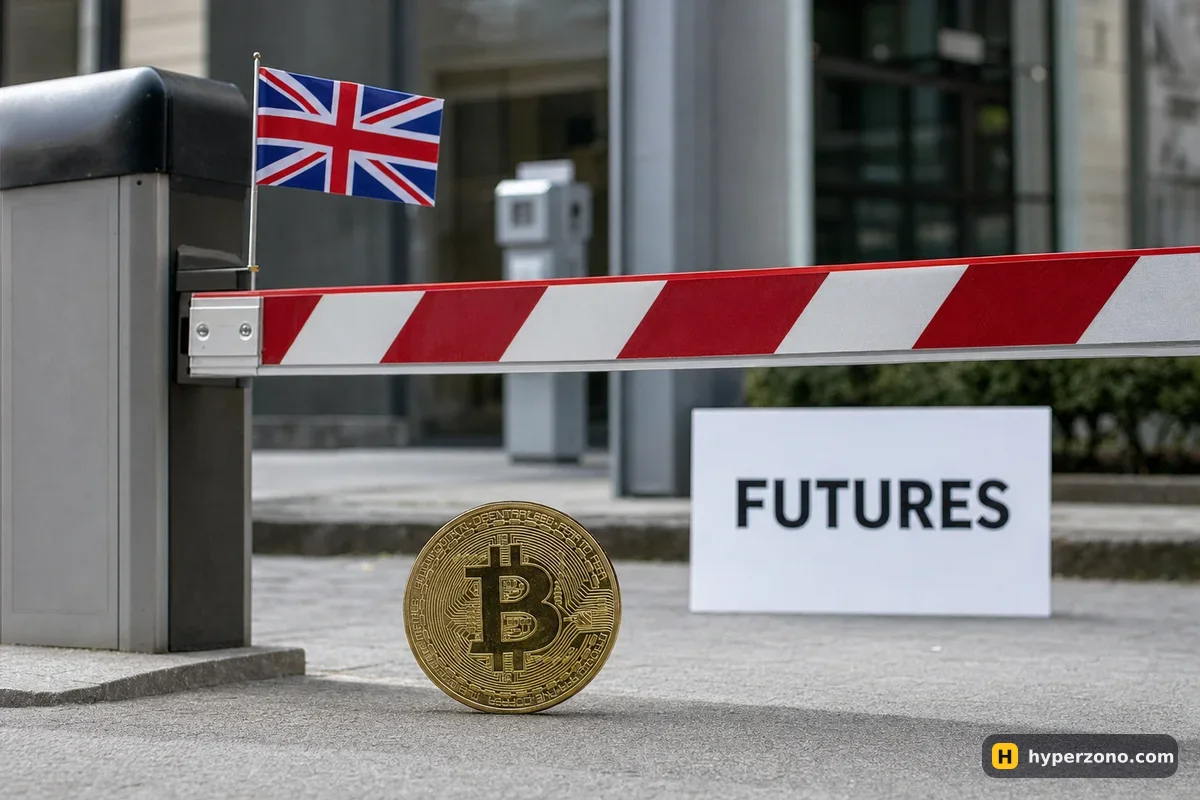
In October 2020 the FCA published a press release called "FCA bans the sale of crypto-derivatives to retail consumers". In plain words: firms are not allowed to sell ordinary UK customers products whose price simply follows bitcoin or another coin, and that includes futures and the perpetual contracts you see advertised. That is why no UK-regulated firm will open a futures account for a private customer. The ban binds the firms, not you personally — but it means there is no regulated, protected place in the UK where you can open a crypto futures account.
The newest FCA page we could find on this is still that 2020 ban, and as of 20 October 2026 it is what applies to crypto futures and perpetuals. The FCA has looked again at other crypto products since, so open the FCA page yourself rather than trusting a video summary — the link is at the bottom. If you want the general picture of why access differs from country to country, we cover that in which futures exchanges are available in my country, and if you're reading this from the EU instead, we cover the rules there on a separate page.
What about calling yourself a professional investor?
Some offshore sites offer to mark you as a "professional investor" with one tap, as if that single tap changed who you are. Nobody becomes a professional investor by ticking a box on a sign-up form. If a platform tells you otherwise, that tells you something about the platform rather than about your options.
What the exchanges say on their own UK pages
OKX's own help page for the United Kingdom says UK customers are served by Aux Cayes FinTech Co. Ltd., a company registered in Seychelles, and marks perpetual swaps, futures, spot margin, options and trading bots as unavailable to retail customers there. Binance's own materials list derivatives as unavailable in the United Kingdom. Two of the biggest names in the business, two different corporate structures, the same outcome for a UK reader.
Other platforms simply don't mention the UK anywhere in their restricted-country lists. That absence is not permission. Those lists describe each company's own policy, usually written offshore, and they say nothing about what a firm is allowed to sell into the UK. A site that happily opens a futures account for a UK resident is telling you something about itself — which is exactly the kind of signal the checks in how to tell a futures exchange from a scam are built around.
No fake address, no borrowed documents. Pretending to live somewhere else breaks the platform's own terms, and the usual result is a frozen account during withdrawal checks, when your money is already on the inside. There is no clever route around this, and we will never give you one.
If you already have an account from before
Plenty of UK readers opened an account years ago and now wonder whether it will be frozen. We are not going to guess, because each venue handles its UK users differently and the notices change. What you can do is concrete and takes an evening.
Read what your exchange has actually told you
Check the announcements section in the app, the UK-specific help pages and your email history. The exchange's own notice is the only reliable description of what your account can still do.
Reduce rather than add
If you hold open leveraged positions, your safest path is to close them in an orderly way rather than let a policy change catch you with an open trade. Don't open new ones.
Withdraw under the platform's normal rules
Move funds out the way the exchange tells you to, with the identity checks it asks for. Rushing or using someone else's account is how people lose the balance entirely.
Save your records
Export your trade history, deposit and withdrawal records and account statements before you stop using the account. You may need them later for tax or for a dispute, and exports get harder once access is limited.
What you can still do legally
Buying and selling crypto itself — spot, no leverage — is a different product from derivatives. Before you send money anywhere, look the firm up on the FCA's register and search the FCA Warning List, which the regulator describes as a list of firms and individuals it knows about that are not allowed to operate in the UK. While you are on fca.org.uk, check what consumer protection applies to the firm you picked, because that differs sharply between authorised and unauthorised businesses.
And you can still learn how it works. Why a trade gets closed automatically when the price goes the wrong way, what the deposit the exchange holds is for, why traders set an exit level before they open anything — none of that changes from one country to another. Knowing it costs nothing and takes a few evenings.
A word on tax
Tax on derivatives works differently from simply holding a coin, and the rules change, so check the current guidance on gov.uk or ask a UK tax adviser — take your exported records with you. If you have an old futures account with closed trades on it, start with our plain-language summary of how UK crypto futures tax works so you know which questions to ask.
Where to go from here
Nothing on this page needs an account. Start with what crypto futures actually are and then learn the mechanics without real money — if your situation or the rules ever change, you'll already know what you're looking at.
Is it illegal for me personally to trade crypto futures in the UK?
The FCA's rules are aimed at firms selling, marketing and distributing these products to retail consumers, not at you individually. What that does mean in practice is that any platform taking you on is doing so from outside the UK rulebook, so you lose the protections a UK customer normally expects. For your own legal and tax position, ask a UK-qualified professional rather than a forum.
Can I just put a different country on my account?
No, and we will not help with it. Giving a false address or using someone else's documents breaks the exchange's own terms, which means the account can be closed and the funds held while the platform runs its checks. It usually surfaces at the worst moment, when you try to withdraw.
What happens to the account I opened years ago?
That depends entirely on the exchange and on what you completed at the time, so read its own UK notices in the app and by email. The safe default is to stop opening new leveraged trades, close what you have in an orderly way, withdraw under the platform's normal rules and keep your records.
Is a demo futures account allowed in the UK?
Demo usually sits behind a registered account on an exchange, and availability varies by country, so don't assume you can get one. Free material and browser simulators that need no account are a cleaner way to see how margin, leverage and liquidation work.
An exchange's restricted-country list doesn't mention the UK — does that mean it's fine?
No. Those lists describe each company's internal policy, often written by an offshore entity, and they say nothing about what may lawfully be sold to UK retail customers. The UK position stands whatever the list says.
Sources and fact-check
Exchange terms were checked against official documents on October 20, 2026. Terms change — before you trade, check what matters to you in the exchange app and in your contract’s specs.
FCA: FCA bans the sale of crypto-derivatives to retail consumersFCA: FCA Warning List of unauthorised firmsOKX: OKX UK — what can I use in the United Kingdom?