Contents
Bybit futures fees in percent, and in USDTMarket or limit: the same trade, two pricesHow to pay less when the trade is smallWhere to see your own fee rateBybit futures fees next to other exchangesBybit futures fees in percent, and in USDT
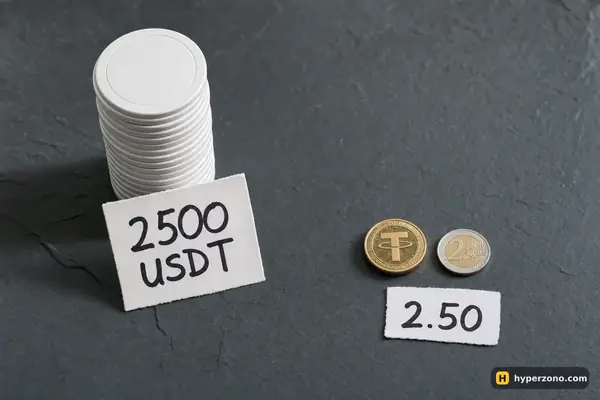
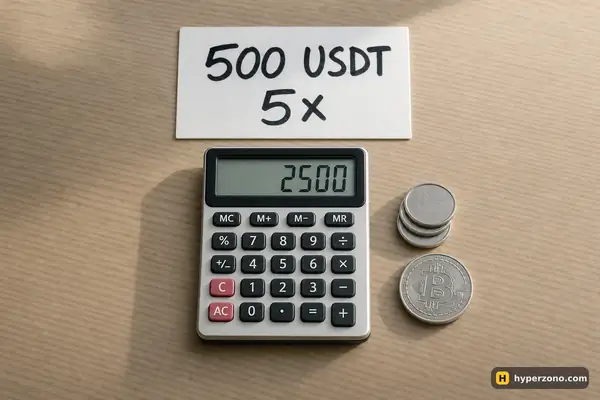
The percentage is charged on the size of your position, not on the money you put up. If you set aside 500 USDT of margin and choose 5x, your position is 2,500 USDT, and that 2,500 is the number the fee is calculated from. Entry and exit are charged separately, so every trade has two fees.
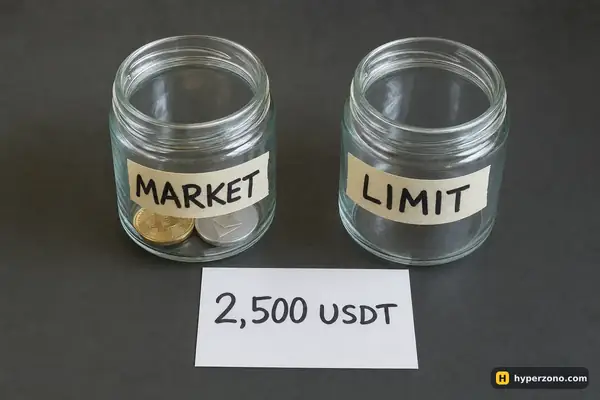
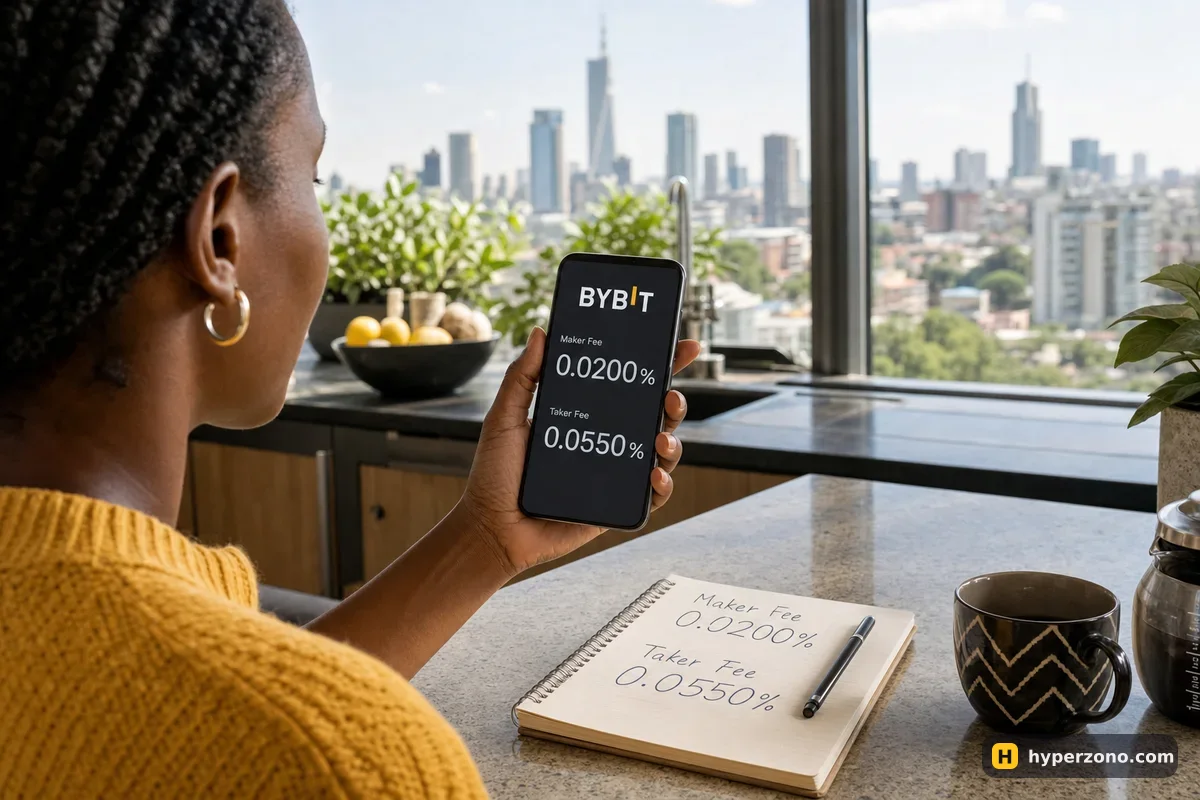
There are two rates because there are two ways your order can fill. If you hit a price that is already in the order book, you are the taker and pay 0.055%. If your limit order sits in the book and someone else trades against it, you are the maker and pay 0.02%. That is an execution role, not a button: a limit order that fills instantly is still charged the taker rate. The general picture of what you pay on any exchange is in what fees you pay on crypto futures.
Keep both numbers in front of you while you plan the trade. Multiply the taker rate by the position — 2,500 × 0.055% = 1.375 USDT — and remember the same charge comes again when you close. Two groups of contracts have their own schedule in the same Bybit article: pre-market perpetuals are 0.04% maker and 0.10% taker at VIP 0, and Innovation Zone contracts are 0.04% maker and 0.11% taker. On a 2,500 USDT position that turns the market round trip into 5.00 USDT and 5.50 USDT. Check the fee shown on the contract itself before you open it.
Bybit has cheaper levels above the base row, and they go a long way down — at the top, Supreme VIP, the maker rate is 0% and the taker rate 0.03%. The first step, VIP 1, already asks for 10 million USD of derivatives volume in 30 days or 100,000 USD of assets on the account, whichever qualifies you first, and levels are refreshed daily at 07:00 UTC. With 500 USDT you are on the base row, so plan with 0.02% and 0.055%.
Fee schedules do get updated, so the table below is refreshed from the exchanges' own fee pages rather than typed in by hand. Find the Bybit row, read the maker and taker percentages, and multiply each one by 2,500 — the position you get from 500 USDT of margin at 5x — to turn it into the USDT you will actually be charged on entry and again on exit.
| Where | Maker | Taker | How to pay less | A 2,500 USDT trade: market in and out | Limit in, market out |
|---|---|---|---|---|---|
| Binance Futures | 0.02% | 0.05% | pay fees in BNB: 0.018% / 0.045% | 2.50 USDT | 1.75 USDT |
| Bybit | 0.02% | 0.055% | — | 2.75 USDT | 1.88 USDT |
| OKX | 0.02% | 0.05% | — | 2.50 USDT | 1.75 USDT |
| Hyperliquid | 0.015% | 0.045% | up to 40% off for staking HYPE: 0.009% / 0.027% | 2.25 USDT | 1.50 USDT |
| Binance Wallet / Aster | 0% | 0.04% | — | 2.00 USDT | 1.00 USDT |
Base level for a new account. 2,500 USDT is 500 USDT at 5x leverage; the fee is charged on the position size, not on your 500. Taker is the rate when an order fills at once, maker when a limit order waits in the book.
fees checked 24 Oct 2026 on the exchanges’ fee pages, Binance Futures, Bybit, OKX, Hyperliquid, Binance Wallet / Aster.
Market or limit: the same trade, two prices
Say you open a 2,500 USDT position on BTCUSDT with 500 USDT of margin at 5x. Entering with a market order costs 2,500 × 0.055% = 1.375 USDT. Closing the same way costs another 1.375 USDT. Your full round trip is 2.75 USDT, which is 0.55% of the 500 USDT you put in — and in price terms, bitcoin has to move about 0.11% in your favor before you are even.
Now place a limit order below the market and wait for price to come to you. The entry costs 2,500 × 0.02% = 0.50 USDT. Close with a market order and the round trip is 1.88 USDT; close with another resting limit order and it is 1.00 USDT. Same trade, same risk, roughly a third of the cost. If you are not sure which order type does what, read market or limit order.
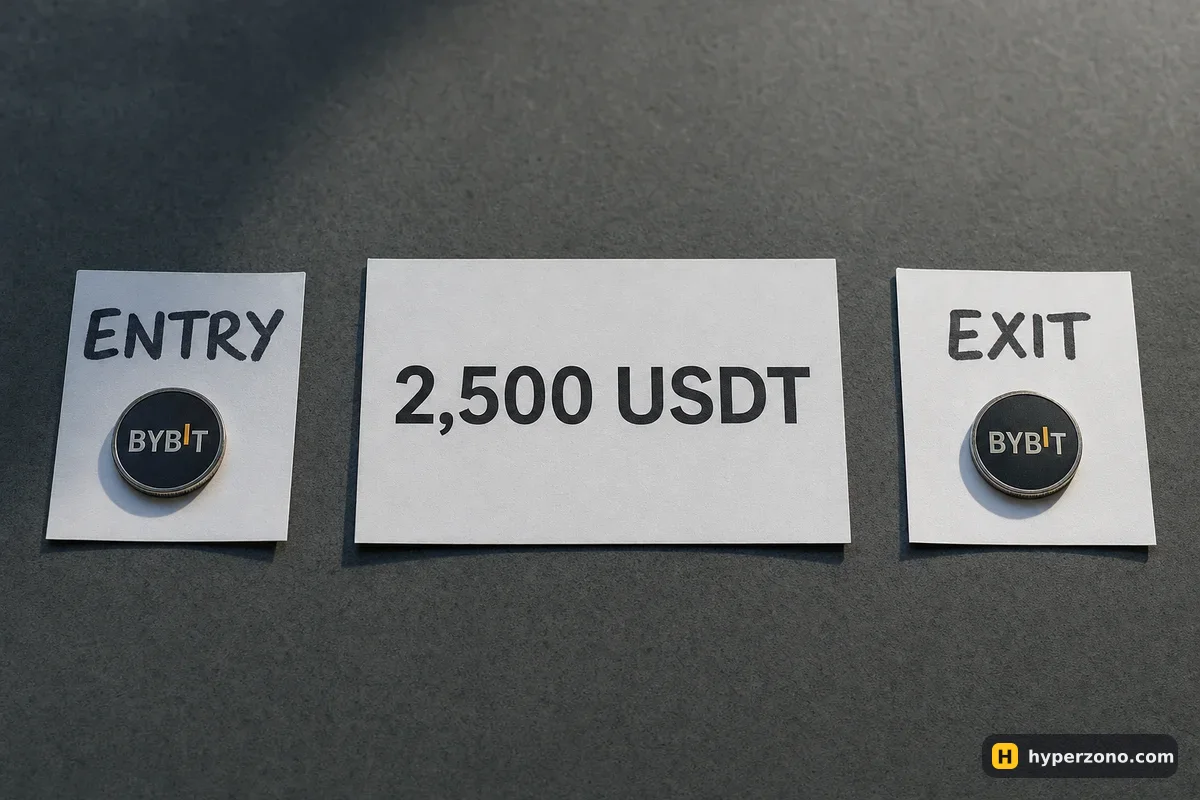
Leverage changes this number, even though it does not change the money you put up. The same 500 USDT at 10x is a 5,000 USDT position, so the taker round trip doubles to 5.50 USDT — and so does your loss when price goes the other way. Higher leverage means a bigger position, and the fee follows the position. Put your own numbers in below and see the result before you trade.
How to pay less when the trade is small
The VIP ladder is built for volume you will not reach with a 500 USDT account, so the savings that are actually available to you come from how you trade, not from your tier.
- Enter and exit with limit orders that wait in the book. Post-only is the safety catch: it either fills you as a maker or cancels the order instead of charging you the taker rate.
- Trade less often. The fee is charged per execution, so ten market round trips on that size add up to 27.50 USDT whether the trades won or lost.
- Count the fee before you enter, not after. On a small account ten round trips cost more than most single trades make.
Fees are not the only cost of holding. If you keep a perpetual open for hours or days, you also pay or receive funding at each settlement, which can be bigger than the trading fee. That money goes between traders, not to Bybit — see how funding works.
Where to see your own fee rate
Bybit says the published schedule is the base one and your actual rate can depend on your region, so the only number that counts is the one shown in your own account. It appears on the My Fee Rate page once your identity verification is done.
Finish verification
Bybit shows your accurate rate once your identity check is done, so do this before you calculate anything.
Open My Fee Rate
In the app or on the site, go to your account area and open the fee rate page; it lists maker and taker separately for derivatives.
Read the derivatives row
That is the one perpetual and futures contracts use. Spot has its own rates and they are a different number.
Check a real fill
After your first small trade, compare the fee charged on each execution with what you expected. If the two match, your calculation method is right for every trade after that.
The quickest way to see all of this in one place is to sign up on Bybit — the app will tell you during sign-up whether Bybit and its futures are available where you live, since some countries are not served — then finish verification and open the order window on a small contract, with the rates and the position size in front of you while you plan the trade.
Bybit futures fees next to other exchanges
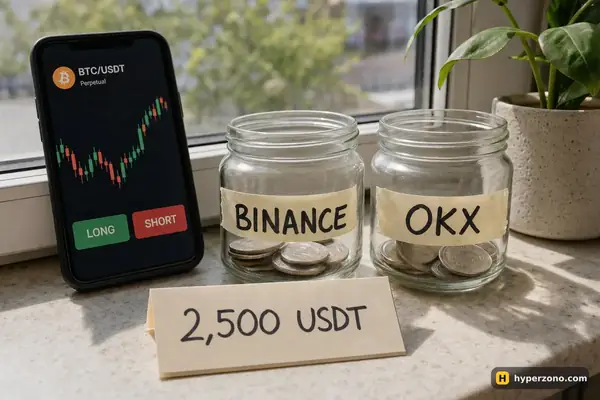
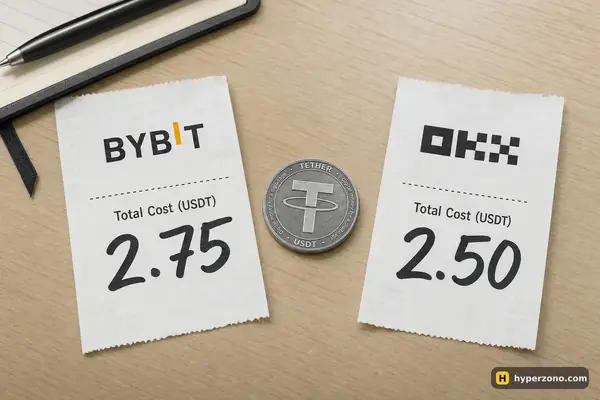
On the maker side Bybit's base rate matches the other big venues; on the taker side it is a touch higher. In money, that same 2,500 USDT round trip at base rates comes out around 2.75 USDT on Bybit, 2.50 USDT on Binance and OKX (2.25 on Binance if you pay fees in BNB), 2.25 USDT on Hyperliquid at its first tier, and 2.00 USDT in the Binance Wallet Perpetuals tab, where the maker rate is 0% so a resting entry and exit cost nothing. As a maker on Bybit, Binance or OKX the round trip is about 1.00 USDT.
The table below lines the venues up at their base levels, kept current from their own fee pages. Read the taker column first, because that is what you pay when you open at market, then the maker column for the version where your order waits in the book. On a 2,500 USDT position, every 0.01% of difference between two rows is a quarter of a USDT per side — useful to know, but rarely the thing that decides where you trade.
On a trade this size the gap is cents either way, so the deciding factors are usually availability in your country, the contracts you want and how the app feels in your hand. The per-venue numbers are worked through on their own pages: Binance fees, OKX fees and Aster and the Binance Wallet tab, with the wider picture in which exchanges have the lowest futures fees. What Bybit is like beyond fees — contracts, products, who it suits — is in the Bybit overview.
How much is the Bybit futures fee on a $100 trade?
It depends on the position, not the deposit. With 100 USDT of margin at 5x your position is 500 USDT, so a market entry costs 500 × 0.055% = 0.275 USDT and the round trip is about 0.55 USDT. With limit orders on both sides it is about 0.20 USDT.
Is there a Bybit futures fees calculator?
Bybit shows your own rate on the My Fee Rate page, and you can do the money part here: the calculator above and our fee calculator take your position size and the two rates and show the cost of entry and exit in USDT. Put in the rate your own account shows, since it can differ by region.
Are Bybit fees taken from my margin or from the position size?
Neither, really — the amount is counted from the position, and then taken out of your balance. On a 2,500 USDT position that is 1.375 USDT when you open at market and 1.375 USDT when you close. Check the fee on your first fill to confirm it matches what you expected.
Bybit futures fees vs Binance: which is cheaper?
At the base level Binance takers pay 0.05% against Bybit's 0.055%, and 0.045% if fees are paid in BNB. Makers pay 0.02% at both. On a 2,500 USDT round trip that is 2.50 against 2.75 USDT — a quarter of a dollar. Rates change, so check both fee pages before you decide on that basis alone.
Why does my Bybit fee look higher on a new coin?
Some contracts have their own schedule. Pre-market perpetuals are 0.04% maker and 0.10% taker at the base level, and Innovation Zone contracts are 0.04% and 0.11% — about double the normal taker rate, so a 2,500 USDT round trip at market costs 5.00 or 5.50 USDT instead of 2.75. The contract page shows which schedule applies.
Can I trade Bybit futures from my country?
Not everywhere. Bybit publishes a list of service-restricted countries that includes the United States, Canada, Singapore, Hong Kong and others, and derivatives can be limited or served by a separate local entity in some regions. The app tells you during sign-up, so check there rather than assuming.
Does a referral link give me a fee discount on Bybit?
Referral programs differ by exchange and change over time, so we do not promise a discount — look at what Bybit shows you during sign-up. Our buttons carry a referral identifier and we may receive a reward, which does not change what we write. More on this in what a referral link actually gives you.
Sources and fact-check
Exchange terms were checked against official documents on October 24, 2026. Terms change — before you trade, check what matters to you in the exchange app and in your contract’s specs.
Bybit: Bybit Trading Fee Structure