Contents
What the big number in the headline actually countsCheck the date, the funds and when it was publishedCompare the headline with what bitcoin's price already didTurning one figure into a trade you can surviveWhat the big number in the headline actually counts
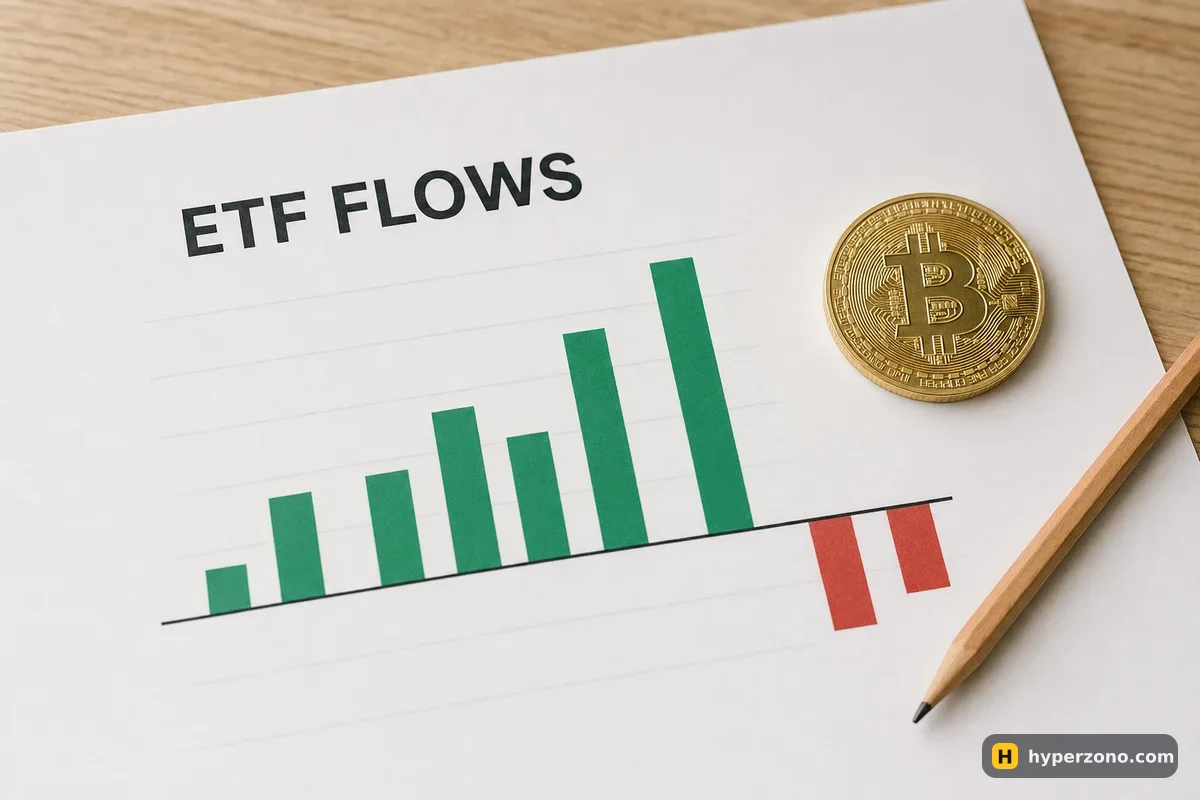
A spot bitcoin ETF is a fund that holds bitcoin on behalf of its investors. When more people put money into the fund than take out, the fund ends up holding more coins — that is a net inflow. The opposite is a net outflow. Separately, people buy and sell the fund's existing shares from each other all day long, which produces a large trading volume while the amount of bitcoin the fund holds doesn't change at all.
So three different numbers get quoted under the same word "flows", and they answer different questions. Before you react to any figure, work out which of the three you are looking at.
| The number | What it tells you | What it does not tell you |
|---|---|---|
| Net flow (per day or per week) | How much money entered or left the funds overall, after both directions are counted | Whether the price already moved on it, or what happens next |
| Trading turnover / volume | How actively the fund's shares changed hands between investors | Any change in how much bitcoin the funds hold |
| Total holdings | How much bitcoin the funds hold in total right now | Today's direction — a huge total can sit still for weeks |
These are called ETFs, but the spot bitcoin ones do not run under the same rulebook as an ordinary fund. The US regulator published a note about them in September 2024. Three things in it matter to you: the fund's share price can drift away from the price of bitcoin itself; the rules that normally cover how a fund values and stores its assets don't apply to these; and the fund pays its costs out of the bitcoin it holds, so one share stands for slightly less bitcoin every year.
Check the date, the funds and when it was published
Flow numbers always describe a period that has already ended, and they reach you later than that. Shares in these funds trade during the main US market session, 9:30 to 16:00 New York time, while a BTC perpetual on a crypto exchange trades around the clock — so by the time a daily flow figure reaches your phone, bitcoin has usually traded for several more hours on that news and on everything else.
Numbers also disagree with each other more often than beginners expect, and sometimes inside a single document. Binance Research's bitcoin report dated 22 May 2026 says US spot BTC ETFs hold around 1.62 million BTC, and in another section of the same piece puts ETF holdings at about 1.32 million BTC — 6.3% of supply, led by BlackRock's IBIT at roughly 811,000 BTC. The report does not reconcile the two. That is not a scandal; it just means each figure counts a different set of funds or a different date, and if you want to use one of them you need to know which.
Where do you get the number in the first place? Free daily flow tables on crypto data sites are the usual starting point, and each fund publishes its own holdings on its website every day. Pick one table, open it on a quiet day when nothing dramatic is happening, and find three things on it: the date it covers, the list of funds, and the name of whoever compiled it. If one of the three is missing, pick another table and keep using that one, so your comparisons from week to week stay honest.
Write it down before you act. In your trade note, record the figure, the period it covers, the funds it includes and the link you got it from. If you cannot fill all four lines, give the number much less weight in whatever you decide next.
Compare the headline with what bitcoin's price already did
Open a BTC chart and mark the hours the flow data covers, then look at what price did during and right after that window. Quite often the move you were about to trade has already happened. Doing this for ten or fifteen releases in a row teaches you more than any single explanation: sometimes a strong inflow day lines up with a strong price day, sometimes it does not, and you will see that with your own eyes instead of taking someone's word for it.
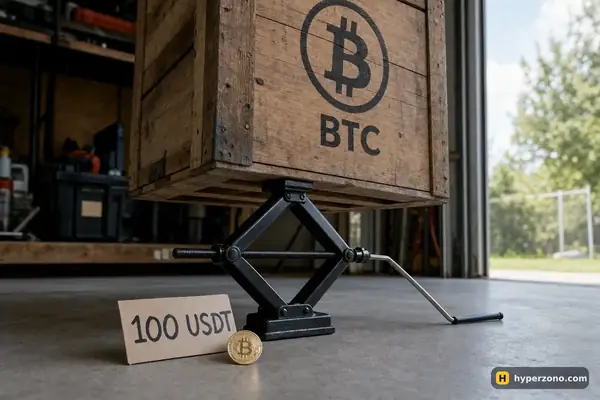
It also helps to put a flow number next to the size of the market. Here is an illustrative example with round numbers: if a headline reports 500 million dollars of net inflows and bitcoin is trading at an illustrative 100,000 USDT, that is about 5,000 BTC. Binance Research says about 450 new bitcoins are created each day, so 5,000 BTC is roughly eleven days of fresh supply. Now you know how big the number is next to new supply. It still doesn't tell you whether price goes up today.
The same report argues that even modest flows move the price a lot because so few coins are actually for sale. That is the author's view, and it has not been tested as a rule you can trade, so keep it as background while you build your own picture of the day.
Turning one figure into a trade you can survive
A flow number can give you a reason to look at bitcoin today. It cannot give you an entry, a stop or a size — those come from your own plan. Decide in advance where you are wrong (your stop-loss level), how much of your account that loss is worth, and only then how big the position can be. For which pair to start on at all, the first coins to trade page covers that choice from the execution side.
The cheapest way to test whether you can actually read this data in real time is to run the whole scenario without money first: note your expectation before the release, then check the chart afterwards. Several venues let you do this in demo futures mode, and the exchanges for beginners page shows which ones are worth starting with where you live. Keep in mind that holding a BTC futures position gives you no stake in any fund — those are different instruments, as spot ETF, futures ETF or a BTC future explains.
When you want to see the real numbers on a contract — the minimum size, the fee, the current funding — the quickest route is to open a Binance Futures account and look at the BTCUSDT order window. On Binance the smallest bitcoin position is 0.001 BTC, and leverage, margin mode and fees are all shown there before you confirm anything. Check that futures are available where you live during sign-up.
Do bitcoin ETF inflows always push the price up?
No, and nobody can promise you a stable relationship. Inflows describe money that has already entered the funds during a period that has ended, and the price has usually traded through that period already. Treat the figure as one piece of context next to the chart and decide from your own plan.
Where do I actually find ETF flow numbers?
Crypto data sites publish free daily flow tables, and each fund shows its own holdings on its site. Pick one and stay with it — switching sources mid-month is how people end up comparing two different things.
Why do two websites show different bitcoin ETF holdings?
Because they count different funds or different dates. Even one research report can carry two figures — Binance Research's May 2026 piece gives both about 1.62 million BTC and about 1.32 million BTC for ETF holdings without reconciling them. Learn what your chosen source counts, and your week-to-week comparisons will mean something.
Is a big outflow day a reason to open a short?
It is a reason to look, not a plan. A short needs the same things as a long: a level where you would admit you were wrong, a size you can afford to lose, and an idea of what already happened to the price during the hours the data covers.
Does holding a BTC perpetual give me anything from the ETFs?
No. A perpetual follows bitcoin's price and costs you fees and funding. A fund share is a claim on a fund that holds bitcoin and pays its running costs out of those coins. They are separate products with separate risks, even when both follow the same price.
Sources and fact-check
Exchange terms were checked against official documents on November 7, 2026. Terms change — before you trade, check what matters to you in the exchange app and in your contract’s specs.
SEC Investor.gov: Exchange-Traded Products (ETPs) Providing Exposure to Bitcoin and Ether – Investor BulletinBinance Research: Bitcoin: From Pizza to Portfolio