Contents
What the 30% rule actually saysWhy losses hurt more here than on other marketsWhere the law goes quiet: futures and perpetualsWhich law applies to which yearWhich form do I file, and where do I check it?What to keep, starting with your first tradeTwo things to settle before the tax question mattersWhat the 30% rule actually says
The rule sits in section 115BBH of the Income-tax Act, 1961, headed "Tax on income from virtual digital asset". It says that where your total income includes income from the transfer of any virtual digital asset, your tax is the sum of two things: 30% on that VDA income, plus the normal tax on the rest of your income calculated as if the VDA part had been taken out. It applies "notwithstanding anything contained in any other provision of this Act", which is why it overrides the usual slab rates you pay on salary or business income.
Two more lines of the same section matter for a trader. The section allows you to subtract only what the asset cost you — not your trading fees, not your funding payments, not your internet bill. It also says this covers the asset whether or not it counts as a capital asset for you, which is one more thing to look at when your return is prepared.
The section text does not mention surcharge or cess at all, so do not assume 30% is the whole bill — check what else applies to you before you budget for it.
This is not personal tax advice. Tax rules change and your situation may not match anyone else's — read the current text on incometax.gov.in and sit down with a chartered accountant before you file.
Why losses hurt more here than on other markets
In most trading, a losing trade softens the tax on a winning one. Here the text points the other way: a loss on a virtual digital asset does not reduce income calculated under any other provision, and it does not travel into later years. In tax language that is "no set-off and no carry forward". In money language: a bad month does not pay for itself later.
Here is what that looks like with illustrative numbers. Say one trade closes at +400 USDT and another at −300 USDT in the same year, so your own result is +100 USDT. The section says no loss may be set off while working out that income. Read strictly, that means the 400 is what gets taxed, not your 100 — about 120 USDT of tax on a year in which you made 100. Nothing in the text says how that works for futures, so take your statements to a chartered accountant before you decide it is fine.
Where the law goes quiet: futures and perpetuals
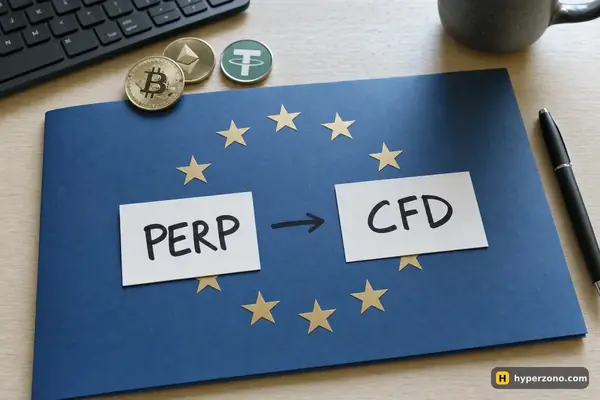
Everything above is written about transferring a virtual digital asset — parting with the thing itself. A USDT-margined perpetual is not a coin you hold and hand over; it is a contract whose result lands in your account as USDT. The section 115BBH text does not mention futures, perpetual contracts, derivatives, funding payments, fees, USDT or conversion into rupees anywhere, and it does not even carry the definition of a virtual digital asset — that definition lives in a different section.
Four questions nobody can answer from the text alone. Write them down and take them with you when your return is prepared:
- Is the contract itself a VDA, or only the USDT that settles it?
- If it is not a VDA, is the result capital gains or business income?
- Can fees and funding payments be deducted at all?
- Which rupee rate, on which date, applies to a result earned in USDT?
Working out your real result after fees and funding is a separate skill, and the page on net profit on futures covers that arithmetic. Arithmetic is not a tax treatment, but nobody can classify numbers you never wrote down.
Which law applies to which year
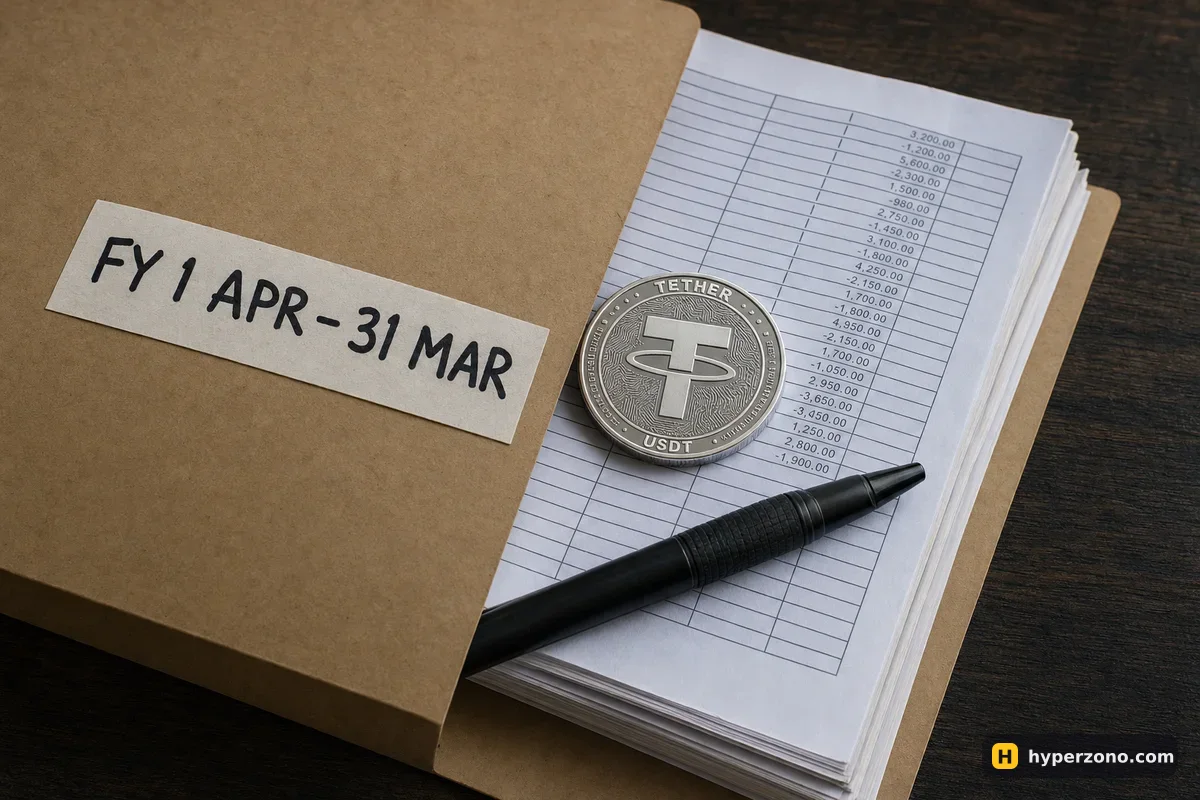
India's financial year runs from 1 April to 31 March, so group your records that way from the start, per exchange. Section 115BBH sits in the Income-tax Act, 1961, and a footnote on it says it was inserted by Act No. 6 of 2022 with effect from 1 April 2023. Whether the version you are reading carries the newest amendments is worth checking on incometax.gov.in each year, because that detail changes quietly.
India has a new law as well: the Income-tax Act, 2025 replaced the 1961 Act from 1 April 2026. Budget 2025 kept the flat 30% on VDA income and the 1% TDS, and the government said the new Act does not change what counts as a virtual digital asset; the definition now explicitly includes "crypto-asset". What changes is the section numbering. So the year decides which Act you quote: income earned up to 31 March 2026 (FY 2025-26, filed in 2026) is still taxed under section 115BBH of the 1961 Act, while trades from 1 April 2026 fall under the new Act. Take the new section number from the department's own text or your return form on incometax.gov.in, not from a blog.
Which form do I file, and where do I check it?
Forms and their instructions are reissued every year, so a blog post from two years ago is not the rule. Open incometax.gov.in, read the instructions published with this year's ITR forms, and have your exchange exports in hand before you file rather than after. If tax was deducted against your PAN while you traded, bring those figures too.
You will also find confident instructions online about a separate schedule where VDA transactions are listed one by one, and about the 1% TDS under section 194S, usually with no link to a government page. Treat them as a starting point and check the current instructions yourself.
What to keep, starting with your first trade
The one thing nobody disagrees about is records. Exchanges let you download reports, and they are far easier to pull now than a year later, when a contract may be delisted or your account closed. Save them per exchange and per financial year, in a folder you will still be able to find in two years.
Export your trade history
Every order and fill with date, time, contract, side, quantity and price, plus realised profit and loss trade by trade — not just the monthly summary.
Export fees and funding separately
Fees charged on entry and on exit, and funding payments both received and paid. These are the lines that explain why your balance moved when no trade closed.
Save money in and money out
Deposits and withdrawals with their on-chain transaction IDs, and transfers between your spot and futures wallets, which are not sales even though they look like movement.
Write down the rupee rate
Each time you convert USDT, note the rate and the date next to the exchange's own report of that transaction.
File it by year and by exchange
One folder per exchange, split 1 April to 31 March. Ten minutes a month now saves a week of digging later.
The country-neutral checklist of futures records to keep for taxes walks through where each export sits and what it should contain. If your balance ever moves in a way your trade history does not explain, the usual culprits are fees and funding — here is where that money went.
Two things to settle before the tax question matters
The first is access. Exchanges publish their own restricted lists, and India appears on OKX's risk and compliance disclosure and among the restricted locations in Gate's user agreement, so not every venue will accept you. Those lists change without notice and are never complete, so the only honest check is the exchange's own country pages plus what the app tells you during sign-up; the page on which exchanges are available where you live explains how to read them.
The second is skill. There is no tax on a practice trade, and no reason to find out how a 30% rate feels before you can place a stop-loss without hesitating. Learning without real money first costs you nothing except a few evenings, and the mechanics it teaches — sizing, stops, closing a position — are the same ones your records will later describe.
Do I pay 30% on each trade or on my profit for the year?
Section 115BBH charges 30% on income from the transfer of a virtual digital asset, and says no loss may be set off while computing that income. Read strictly, that points at taxing gains rather than your net result — on +400 and −300 in the same year, the 400 is the number in question, not the 100 you actually kept. The section says nothing at all about futures contracts, so this needs someone looking at your actual statements rather than a rule of thumb from a forum.
Can I set futures losses against my salary or my stock market gains?
The section says a VDA loss cannot reduce income calculated under any other provision, and cannot be carried into later years. Salary and listed-share gains are calculated under other provisions. If your futures trading is treated as VDA income, the answer is no — and that is worth knowing before you size your trades, not after.
Which ITR form should I use for crypto futures?
The instructions published with the current year's ITR forms on incometax.gov.in say which form fits which kind of income, and they are rewritten every year. Picking a form from a blog post is guesswork. Open the instructions, put your exchange exports next to them, and match the two before the return goes in.
What about the 1% TDS everyone mentions?
TDS under section 194S comes up on almost every Indian crypto page, usually with no link to the official text, and how it applies to futures trading is not settled there. Check what has been deducted against your PAN on the income tax portal, and compare it with what you declare before you file.
What exchange rate do I use to convert USDT results into rupees?
The section does not answer this for futures. The practical protection is a record: save the rate and the date every time you convert, and keep the exchange's own report of the transaction. If a different method is chosen later, the numbers can still be rebuilt from what you saved.
Is it worth trading futures at all with these rules?
That is your call, and it depends on more than tax — access, time, and whether you can follow a plan. What you should not do is find out about the rate after a profitable quarter. Price the tax question into your expectations first, practise without real money, and keep every record from day one.
Sources and fact-check
Exchange terms were checked against official documents on October 20, 2026. Terms change — before you trade, check what matters to you in the exchange app and in your contract’s specs.
Income Tax Department: Section 115BBH, Income-tax Act, 1961Business Today: No change in scope of virtual digital asset in Income Tax Bill 2025Business Today: How Budget 2025 has changed virtual digital asset taxation