Contents
What to type into each fieldA real example: three days in a longWhy the annualized number is worth a lookClose before the payment time and you pay nothingWhat this calculator does not include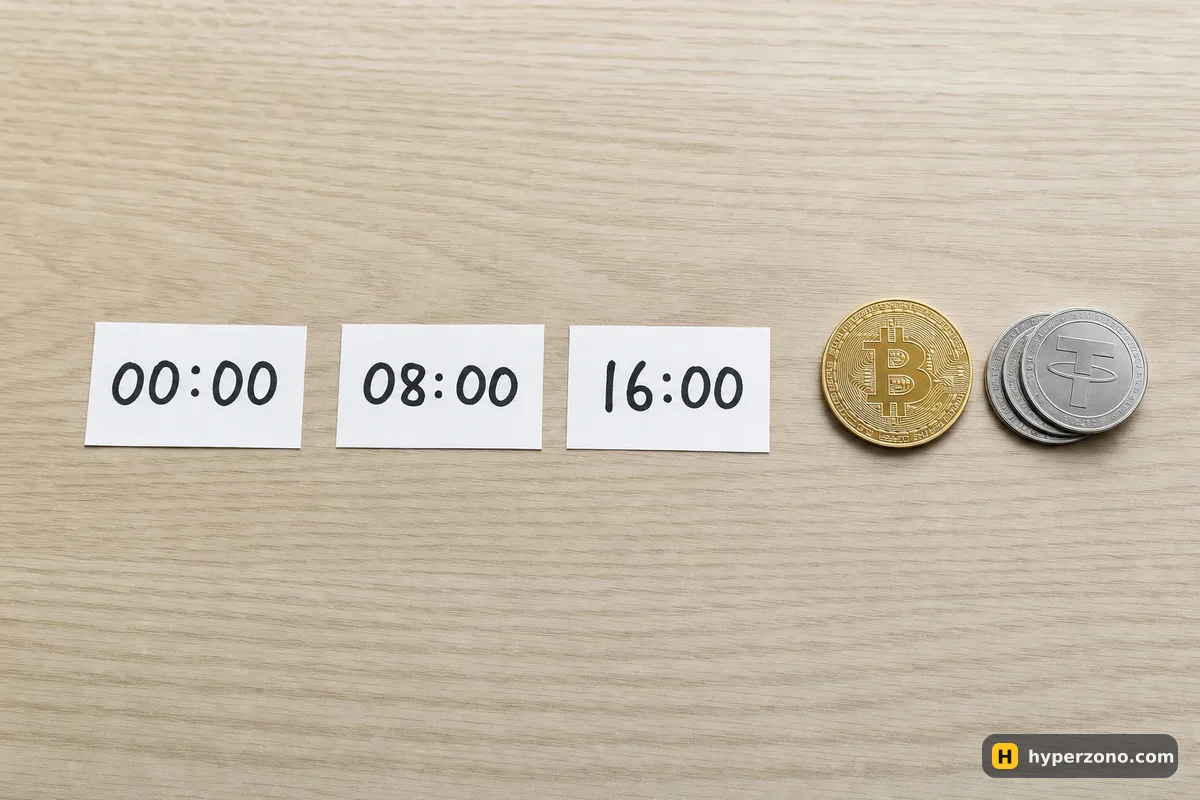
What to type into each field
Position size is the full size of your trade, not the money you put up as margin. If you have 100 USDT and open a position with 10x leverage, your position size is 1,000 USDT, and that 1,000 is the number funding is calculated on. Direction matters because of the sign: when the rate is positive, longs pay shorts, and when it is negative, shorts pay longs.
The rate goes in as the figure the exchange shows for one payment — something like 0.01%, not a yearly number. Then tell the calculator how many payments you expect to hold through and how many hours apart they are. On Binance the default is every 8 hours, at 00:00, 08:00 and 16:00 UTC; some contracts settle every 4 hours, and if the rate hits its cap the interval can shorten to 1 hour. The contract page shows the current funding rate and a countdown to the next payment, so the easiest way to use real numbers is to open a Binance Futures account and read them off your own screen — during sign-up the app will also show you whether futures are available where you live.
A real example: three days in a long
Say you are long 1,000 USDT of BTC and the rate has been sitting around 0.01% per payment (an illustrative number — your contract may show more or less). Each payment is 1,000 × 0.0001 = 0.10 USDT. Hold for three days with payments every 8 hours and you sit through nine of them: 0.90 USDT in total, taken out of your futures balance a little at a time.
Flip the direction and the same numbers come back to you. Short that position while the rate stays positive and you receive 0.90 USDT over the same three days. So the same trade costs one side a little and pays the other side a little. Which side you are on is what decides it.
One funding payment on a 1,000.00 USDT position. Traders pay each other, not the exchange. Each contract has its own rate and interval.
Why the annualized number is worth a look
The calculator also shows what the rate would cost over a year. That number just stretches today's rate out over a whole year as if it never changed — and it changes every few hours. Still, it is useful for seeing how big a small percentage really is: that innocent 0.01% every 8 hours works out to about 10.95% a year on your position size, and a rate of 0.05%, which shows up when the market is heavily one-sided, works out to roughly 54.75% a year.
For a trade you hold for an afternoon, none of that matters much. For a position you plan to carry for weeks, funding can quietly become the biggest line in your result, and the annualized figure is the quickest way to notice before it happens.
Close before the payment time and you pay nothing
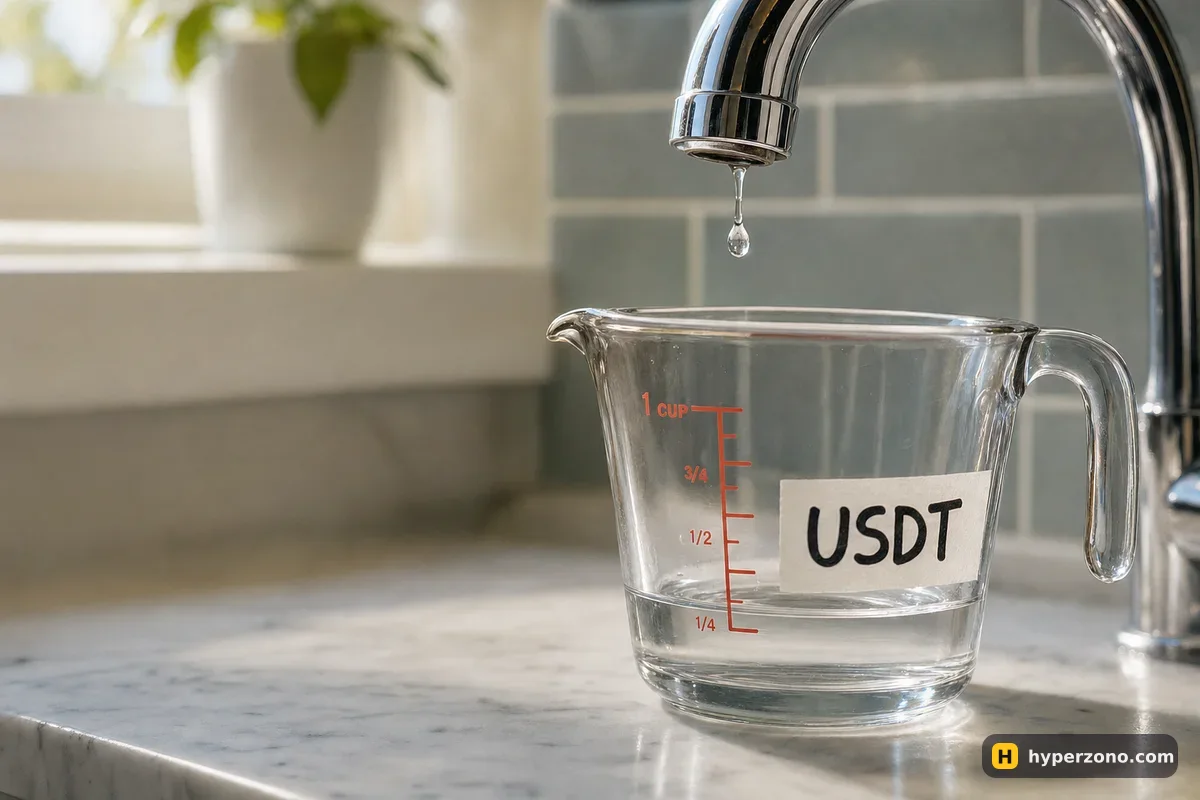
Funding is not spread across the hours you hold. It is settled at one moment, and only the traders with an open position at the settlement time shown by the countdown pay or receive. Open a trade just after a settlement and close it twenty minutes before the next one, and you pay zero funding, no matter how big the rate was.
Count payments, not hours. Seven hours of holding can cost you one payment or none, depending on where the clock falls. When you plan a longer trade, look at the countdown on the contract first and count how many settlements you will actually be sitting through — that is the number the calculator wants.
What this calculator does not include
It gives you funding and nothing else. The exchange's trading fee is charged separately on entry and on exit, and you can work that part out with the fee calculator. Your profit or loss from the price move is a different number again — that one lives in the profit and loss calculator. Add all three together and you get what actually lands in your balance.
One more thing the calculator cannot do is predict the rate. It assumes the number you typed stays the same for every payment, which is a reasonable planning assumption for a day or two and a rough one for a week. If you want to understand why the rate moves, who sets it and why the exchange keeps none of it, read how funding works.
How much funding will I pay on a $100 position?
At an illustrative rate of 0.01% per payment, a 100 USDT position costs 0.01 USDT each time — one cent. Over a full day with three payments that is about three cents. Funding is almost never what hurts a small short-term trade; the fees and the price move are far bigger.
Is funding charged on my margin or on the position size?
On the position size. If you put up 50 USDT at 10x, your position is 500 USDT and funding is calculated on 500. Higher leverage does not change the rate, but it does mean a bigger position behind the same deposit, so the payment is bigger relative to your money.
Do I pay funding if I close early?
No. Only traders holding a position at the settlement time pay or receive. Close a few minutes before the countdown runs out and that payment simply passes you by.
Can I actually earn from funding?
Yes — if you are on the side that receives, the payments land in your balance. But you are still exposed to the price move, which is usually far larger than the funding, so treat a favorable rate as a small discount on holding the trade rather than as income.
Is funding charged every 8 hours everywhere?
No. On Binance it is 8 hours by default, but some contracts settle every 4 hours, and when the rate hits its cap the interval can drop to 1 hour; other venues use their own schedules, and Hyperliquid pays every hour. Set the interval field to match the contract you are actually trading.
Do futures with an expiry date have funding?
No. Funding exists to keep a perpetual contract close to the spot price, so dated contracts do not have it — their price converges to spot by expiry instead. There is more on the difference in the perpetual vs dated guide.